




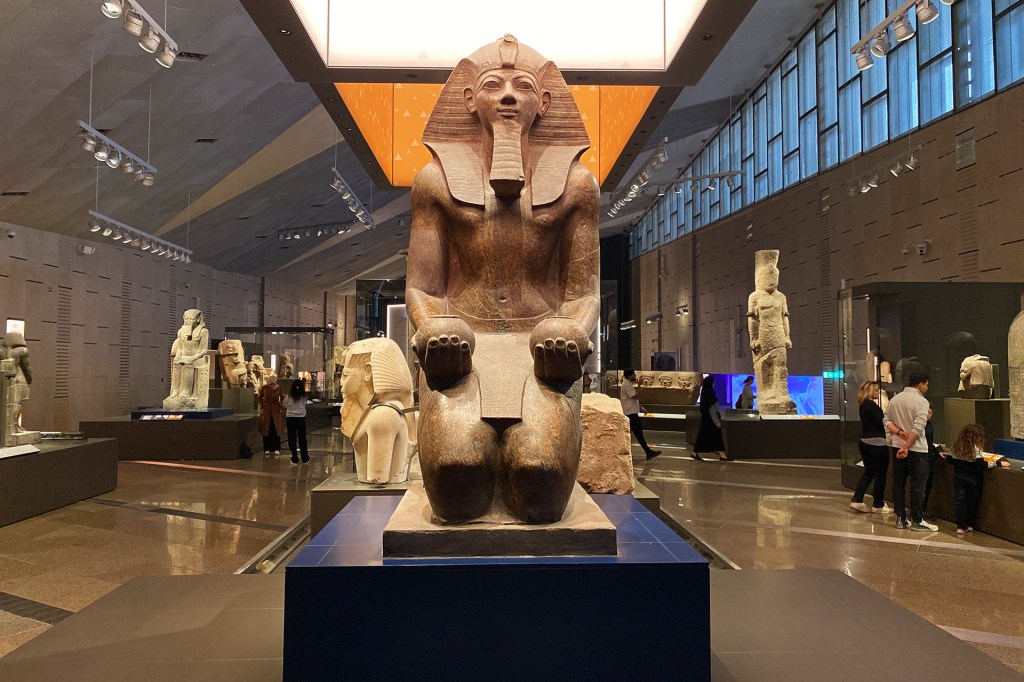
Journey through ancient Egypt. Learn about powerful pharaohs and their lasting legacies. Gaze up at a 36-foot-tall statue of an ancient king. See the wonders of the Great Pyramid of Giza. Visitors can now do it all at the Grand Egyptian Museum (GEM), in Giza, Egypt.
Many museums contain Egyptian artifacts artifact an object made by people of an earlier time (noun) , but the GEM has the largest collection of them in the world. The massive museum took more than 20 years to build: Its foundation was laid in 2002, and the grand opening was finally held in November 2025.
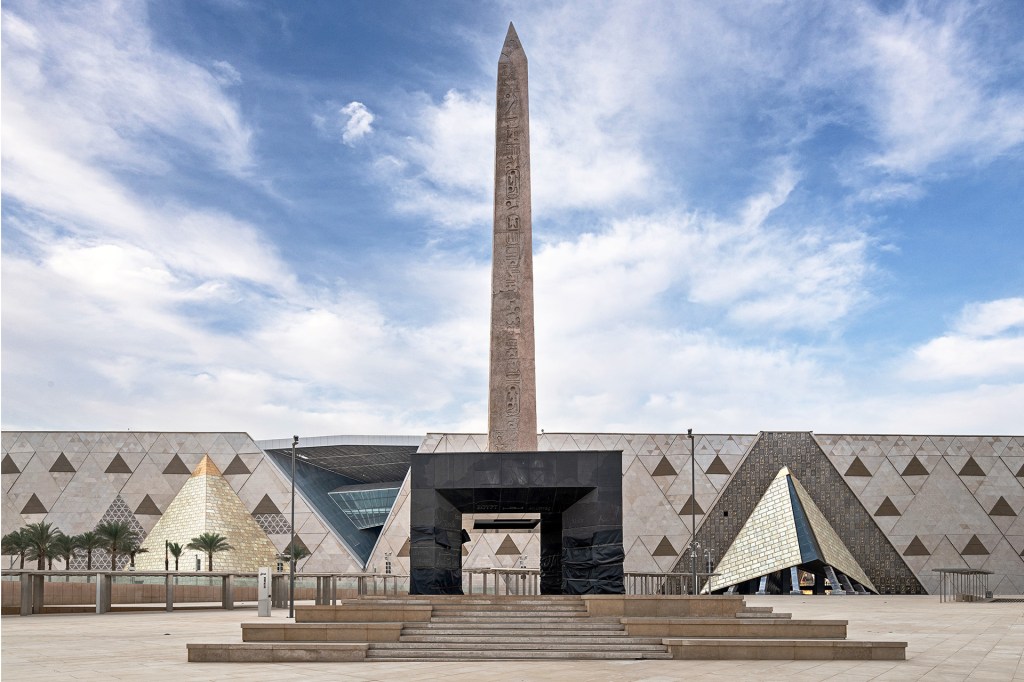
TOWERING OBELISK Pharaoh Ramses II’s obelisk welcomes visitors to the Grand Egyptian Museum.
COURTESY GRAND EGYPTIAN MUSEUM
At the museum’s grand-opening ceremony, Abdel Fattah el-Sisi, the president of Egypt, shared an important goal: to “make this museum a platform for dialogue, a destination for knowledge, a forum for humanity, and a beacon for all who love life and believe in the value of humankind.”
Inspiring Artifacts
The history of Egypt’s pharaohs, or rulers, spans thousands of years. That’s a lot of history—and a lot of artifacts. There are more than 100,000 of them at the museum, some of which have never been shown to the public. The GEM contains jewelry, statues, pottery, and even a mummified crocodile. Guests can explore virtual-reality exhibits, too. And there’s a Children’s Museum for young adventurers.
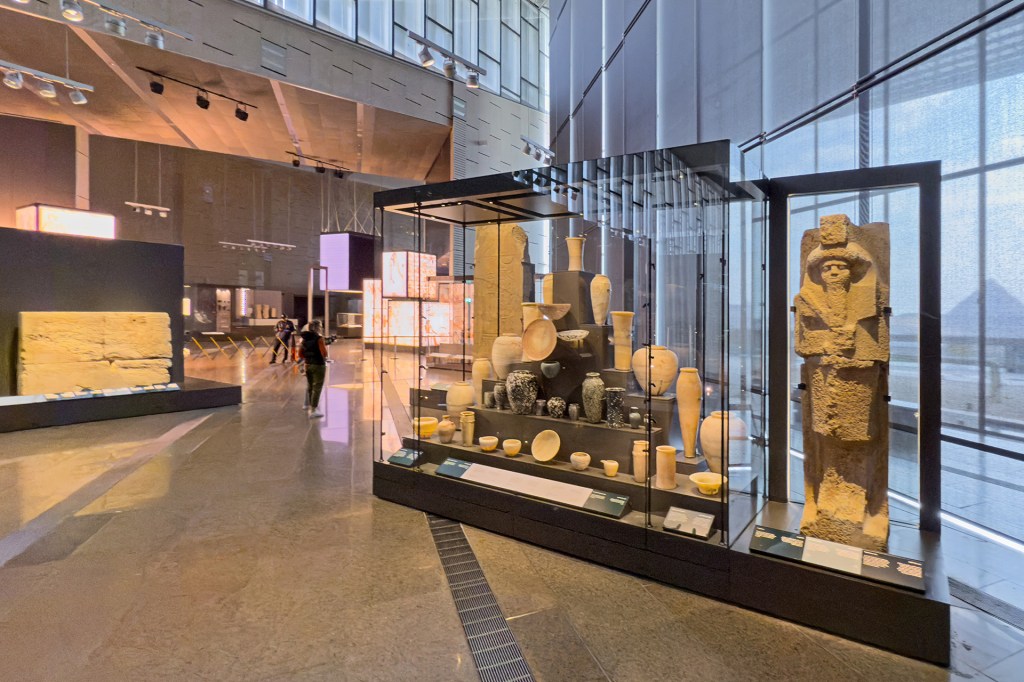
ON DISPLAY The museum holds thousands of artifacts from ancient Egypt, such as these ceramics.
IWAN BANNOne of the museum’s highlights is the exhibit featuring King Tutankhamen, or King Tut. He was Egypt’s youngest pharaoh, buried more than 3,300 years ago. Archaeologists discovered his tomb in 1922. It contained nearly 5,400 objects, which are being shown in one place for the first time at the GEM. (Tut’s mummy isn’t on display at the GEM, it’s in Luxor, Egypt. See “Under Wraps.”)
Peter Der Manuelian is an Egyptologist Egyptologist a person who studies ancient Egyptian culture and history (noun) at Harvard University, in Massachusetts. He has already visited the GEM three times. Der Manuelian told TIME for Kids that the museum is “just spectacular.” He says it will give visitors of all ages, from all over the world, “a tremendous opportunity to study [ancient artifacts] in detail.”
Ancient Architecture
The GEM is near the Pyramids of Giza, the ancient royal tombs built around 2500 BCE. In October 2025, the museum finalized a walkway connecting the GEM with the pyramids. Now anyone can stroll between the sites. Visitors will also enjoy a panoramic view of the pyramids from inside the museum, from huge windows atop its six-story grand staircase.
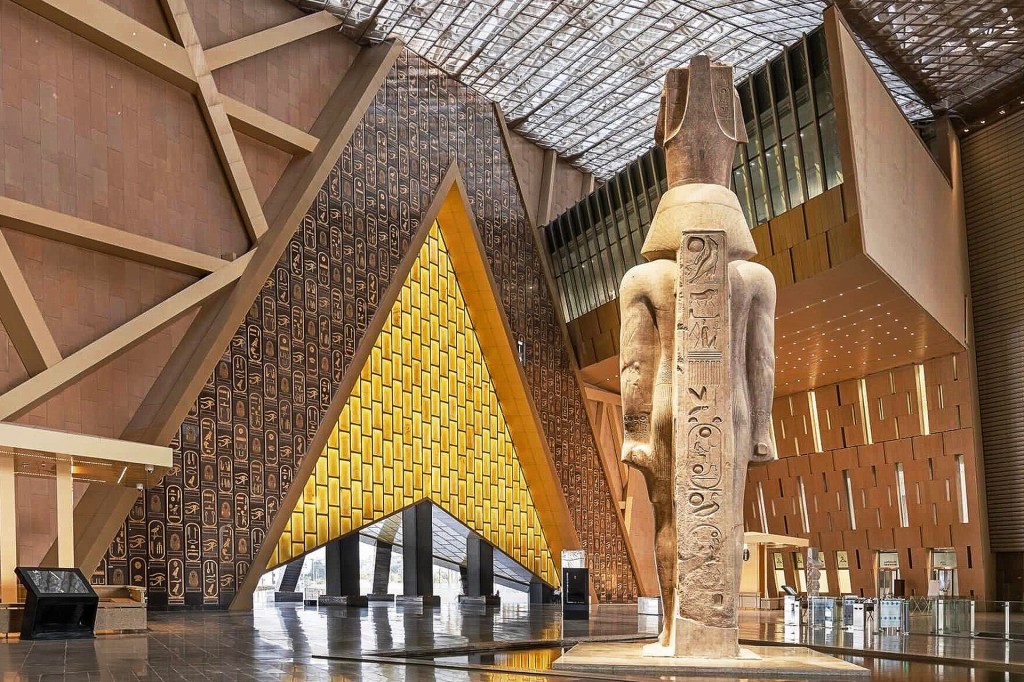
GRAND ENTRANCE This 36-foot-tall statue of Pharaoh Ramses II is housed inside the museum. It’s about 3,200 years old.
COURTESY GRAND EGYPTIAN MUSEUMThe museum’s architecture was inspired by Egyptian history. The front entrance is shaped like a pyramid. There’s also a tall structure called an obelisk outside. This stone monument belonged to Pharaoh Ramses II, who reigned for more than 60 years, from 1279 to 1213 BCE. Visitors who look closely can make out Ramses’ signature on the obelisk.
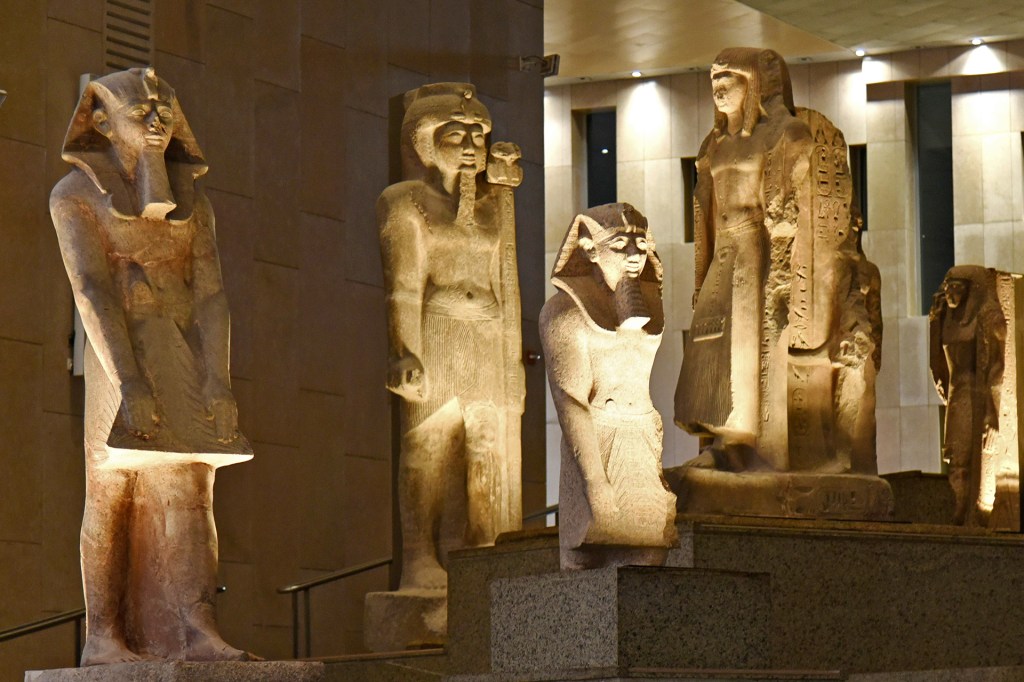
ANCIENT KINGS These statues of pharaohs keep watch over the museum’s grand staircase.
COURTESY GRAND EGYPTIAN MUSEUM
Architect Róisín Heneghan, who helped design the museum, spoke with TFK. “At the Grand Egyptian Museum,” she said, “it is almost like you have traveled back in time.”
Under Wraps
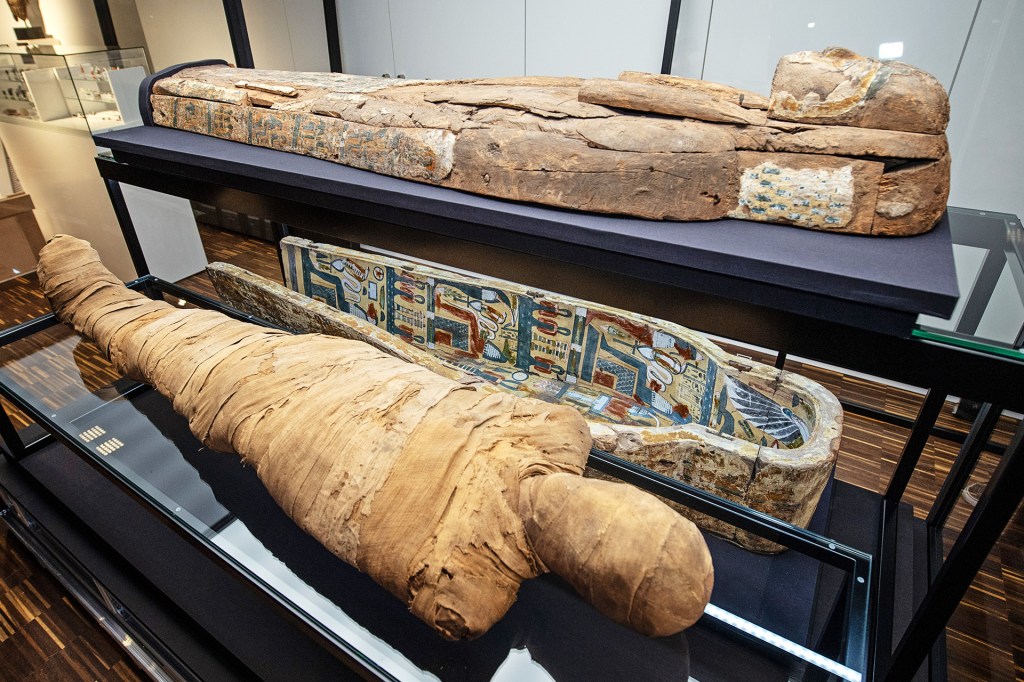
King Tut’s mummy isn’t at the GEM. But visitors to the museum can get an up-close look at other mummies and learn about the ancient practice of mummification.
After important people died, their bodies were carefully cleaned and preserved. Egyptians believed the dead would need their bodies in the afterlife. They believed they’d also need possessions such as food and jewelry. Mummies were buried with these things to help the dead in the next world.
More from World




Share a Link
- Click the icon above to copy the url link to your clipboard.
- Paste the link into the location in which you share assignments with students. Examples might include, but are not limited to Canvas, Schoology and Edmodo.



Google Classroom
- Click on the icon above to share the article with a class in your Google Classroom.
- Choose an action. Options might include creating an assignment or asking a question.