


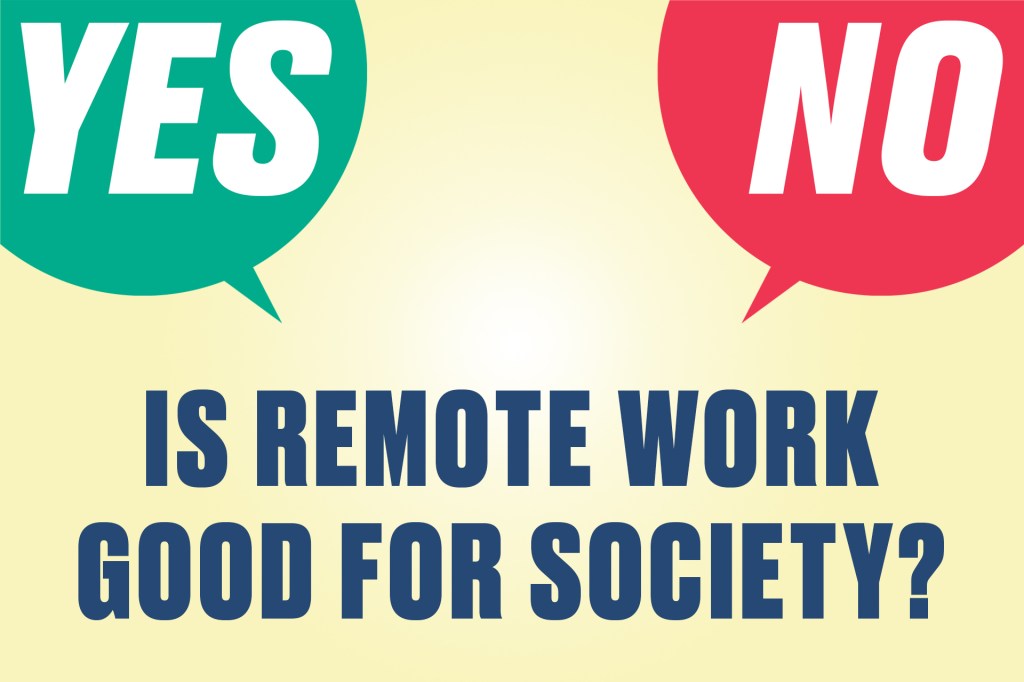
In August, research firm Gallup released a poll. It surveyed U.S. employees who have “remote-capable jobs,” or jobs that can be done anywhere. The poll found that 25% of these employees work only remotely. There are lots of benefits to remote work—but there are also downsides. Recent research suggests that, while many people enjoy full-time remote work, it can contribute to loneliness and a decline in social skills. So: Is remote work good for society? We asked TFK readers for their thoughts on the issue.

Jisu Hong, 10
Uiwang-si, South Korea
Remote work is good for society because it gives people more time to live their lives. It can help people have better work-life balance. They can spend more time with their family, because they don’t have to commute to work. Remote work can help people save money on transportation and even food. People who live far from a big city might have more job opportunities with remote work. And people with disabilities or family responsibilities might find remote work more accessible. It might feel lonely sometimes, but overall, remote work can be good for society.

Tigran Karapetyan, 9
Los Angeles, California
Remote work is bad for society. A study published in Science in June 2026 suggests that remote workers are more isolated, anxious, and depressed than people who work in person. Another reason for my opinion is that remote work might lessen workers’ social skills. A 2024 survey conducted by Resume Builder found that one in four remote employees says working from home has led to a decline in their social skills.
People who disagree might say that working from home could save money on things like gas. To that, I say yes, but humans are social creatures.

Elizabeth Rawley, 10
Foster City, California
Remote work is good for society. With remote work, you can wake up later than usual because you don’t have to worry about driving to work early in the morning. If you do wake up early, you can enjoy a nice breakfast or take a relaxing bath instead of driving to the office. Then when work starts, you will feel refreshed and ready to start your day.
With remote work, you’re not trapped inside. You can breathe fresh air. As long as you don’t slack off, remote work is good for society. You might not be working in an office, but you’re still working!

Olivia Kelly, 11
Lenox Dale, Massachusetts
Remote work is not good for society. We already have AI, phones, and computers. All of these things make for less social time with friends and coworkers. Working remotely means not being face-to-face with people. It means creating a life where people think it’s okay to not see others face-to-face. This affects the way we live. This lifestyle can affect kids’ brains, too.
Remote work could be creating a bad society. This is true not only for adults, but for kids who are watching and learning.
The Next Debate: Do we still need daylight saving time? Email your opinion to tfkeditors@time.com by January 15. Your response might be featured in an upcoming issue.
*Submissions have been edited only for length and clarity. They are not intended to reflect the views of TIME for Kids. Ages are accurate as of the time of submission.
More from Opinion

Share a Link
- Click the icon above to copy the url link to your clipboard.
- Paste the link into the location in which you share assignments with students. Examples might include, but are not limited to Canvas, Schoology and Edmodo.



Google Classroom
- Click on the icon above to share the article with a class in your Google Classroom.
- Choose an action. Options might include creating an assignment or asking a question.