



Icy Adventure
Imagine going back in time. What did the Earth look like a million years ago? Was it warmer? Colder? Was the air different?
An international group of scientists wanted to find out. They looked back in time. But they didn’t use a time machine. They used ice.
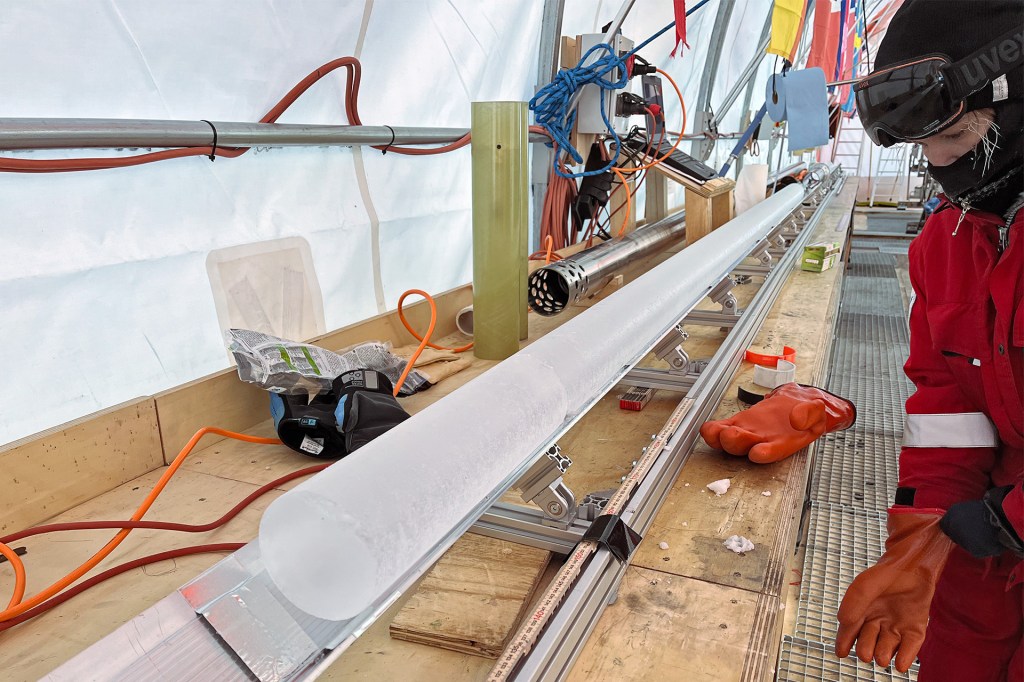
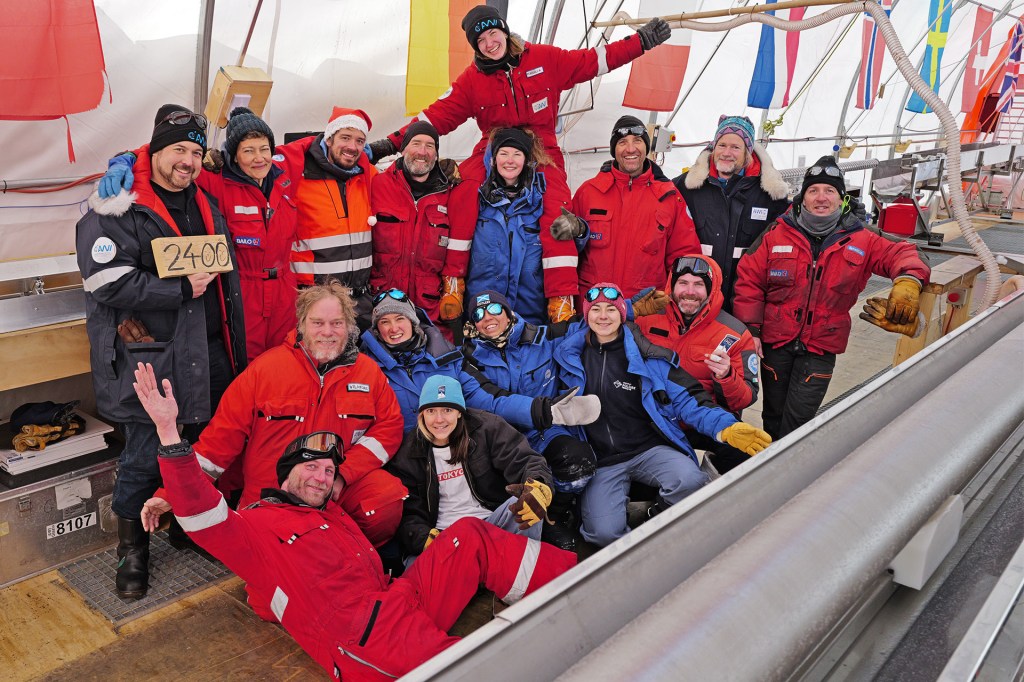
A Beyond EPICA worker inspects part of the ice core. Scientists will melt it to get clues about the past.
PNRA/IPEV BEYOND EPICA
The Oldest Ice
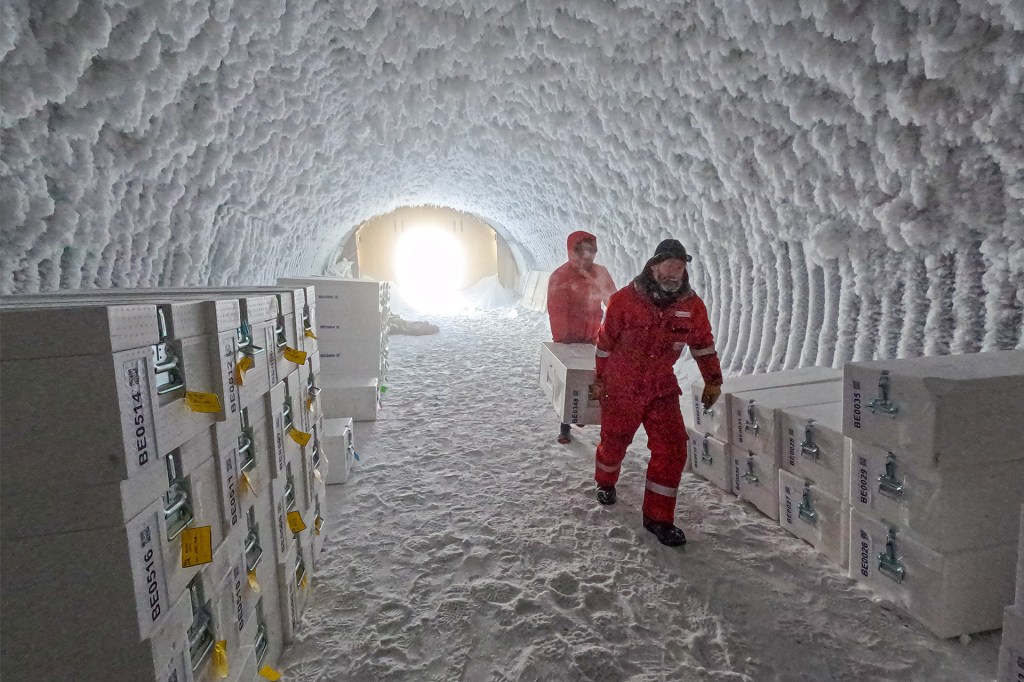
The scientists worked on a project called Beyond EPICA. The group traveled from different countries to a field camp in Antarctica. Antarctica is the coldest place on Earth. It’s covered in ice. The team’s goal was to study the oldest ice they could uncover.
Team members used a big drill to get deep into the ice. They had to go slowly. They could only drill a little bit at a time. Drilling started in 2019. By 2025, the scientists had drilled down about two miles.
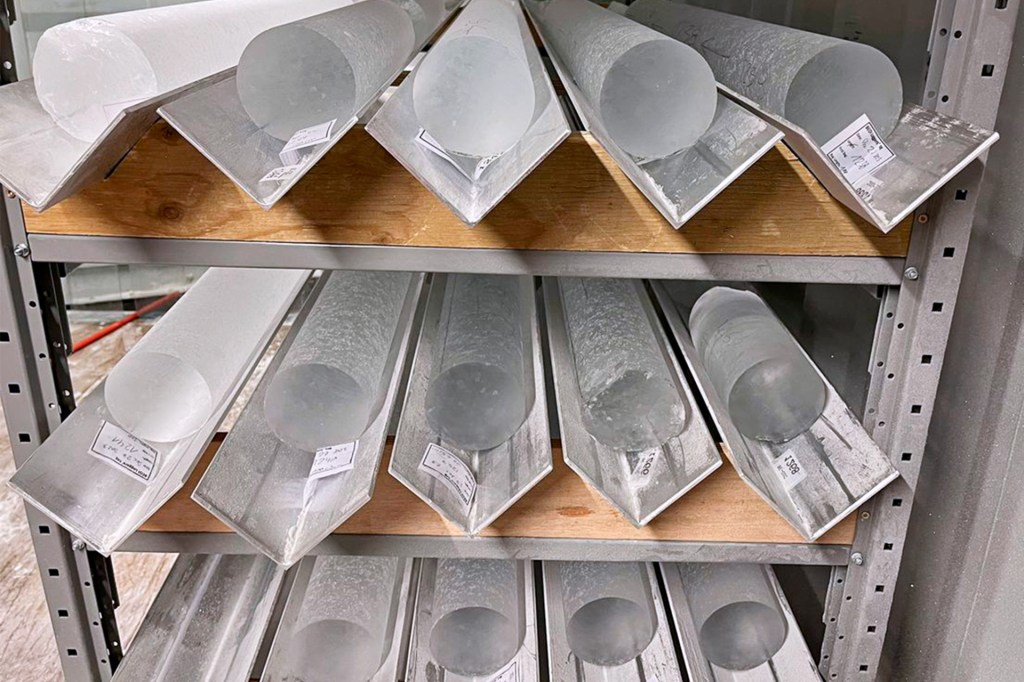
The ice core is first broken into sections from different time periods.
PNRA/IPEV BEYOND EPICAThe team made an announcement in January 2025. It had pulled out a long cylinder of ice called an ice core. It holds a lot of history. Tiny air bubbles are trapped inside. Some of that air is from a million years ago!
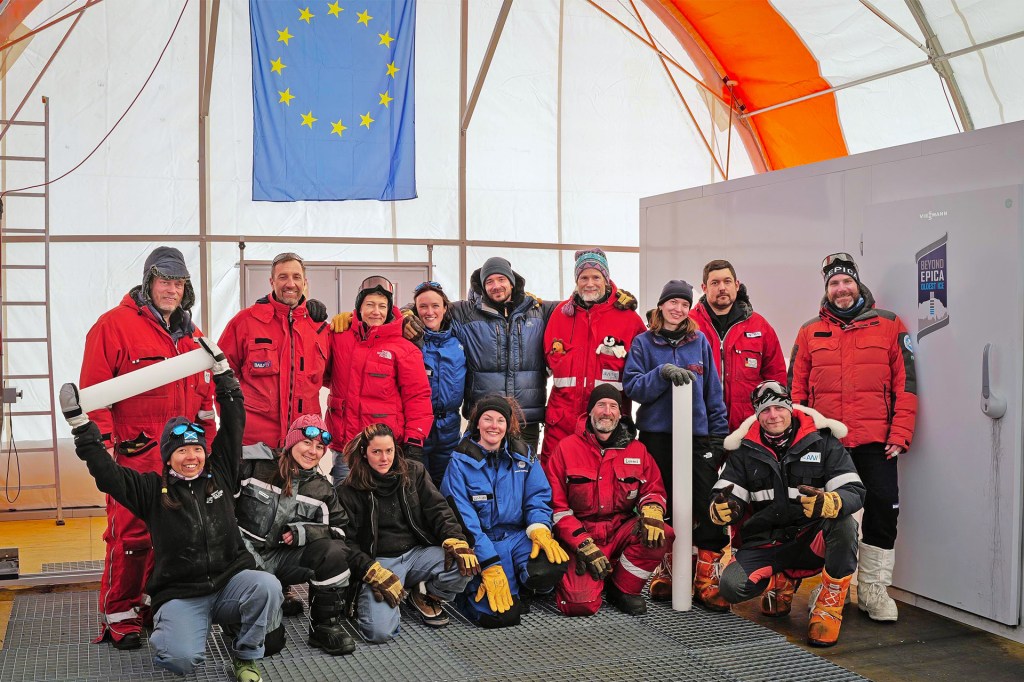
This team worked at the field camp from late 2024 to 2025. They were able to pull out a tube of ice dating back 1.2 million years.
PNRA/IPEV BEYOND EPICAScientists are now studying the ice core. They melt pieces and look closely at the water. It has clues about the air long ago. It also has clues about the Earth’s changing.
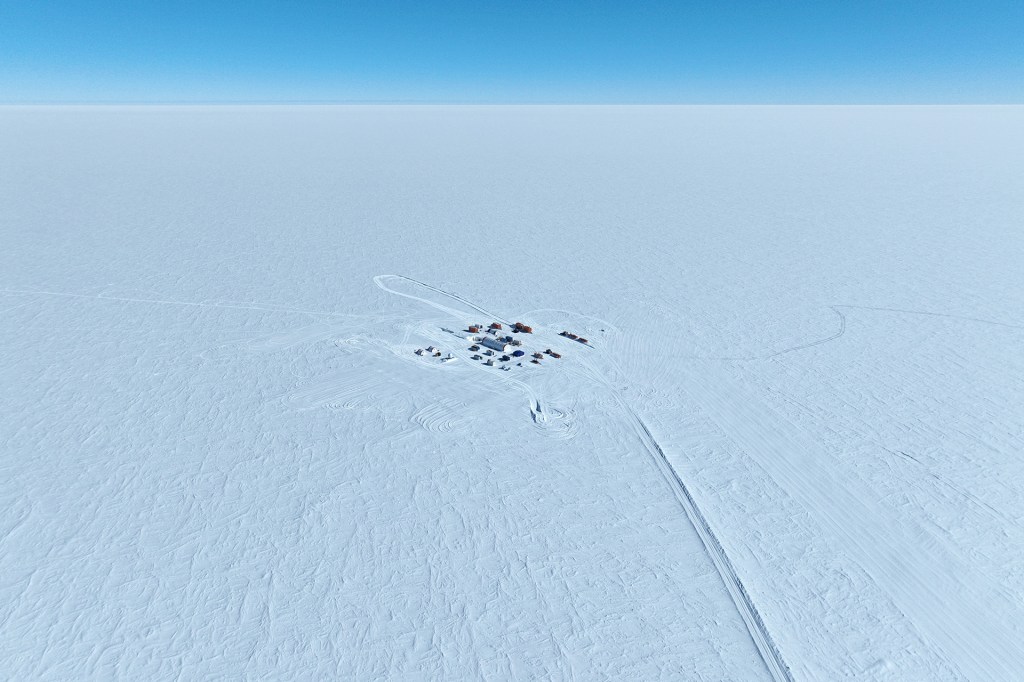
The Beyond EPICA project is based in Antarctica. The camp is far away from cities, towns, and other people.
PNRA/IPEV BEYOND EPICABlast from the Past
Chiara Venier is an Arctic researcher. She works with Beyond EPICA. She explained why this work is important. Venier says the ice will help scientists understand the past. That will help us “better understand what might happen in the future,” she told TFK. “This helps people and governments make smarter choices to protect our planet.”
More from Science
Share a Link
- Click the icon above to copy the url link to your clipboard.
- Paste the link into the location in which you share assignments with students. Examples might include, but are not limited to Canvas, Schoology and Edmodo.



Google Classroom
- Click on the icon above to share the article with a class in your Google Classroom.
- Choose an action. Options might include creating an assignment or asking a question.