



Haunted Waters
There are warm ocean waters and beautiful views on the western coasts of Greece. But these coastlines have a problem: Many of them are cluttered with hunks of metal, bits of plastic, and heavy fishing nets.
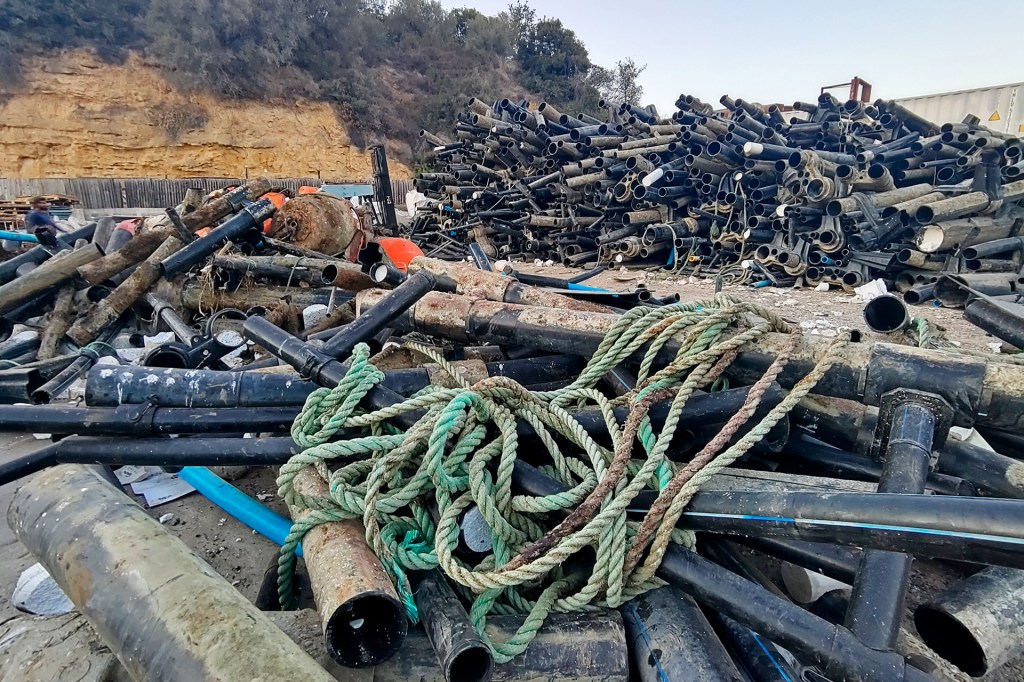
BEACH CLEANUP Piles of garbage await disposal or recycling after a fish-farm cleanup.
COURTESY HEALTHY SEASThe trash comes from abandoned fish farms. These are huge pens where fish are raised for food. Some fish-farming companies leave them behind when they go out of business.
Healthy Seas is an ocean conservation group that works to clean up oceans around the world. It has an eerie nickname for these abandoned places: ghost farms. In 2021, the group started Operation Ghost Farms as a fish-farm cleanup effort in Greece. In the five years since, Operation Ghost Farms has cleared more than 310 tons, or 620,000 pounds, of fish-farm debris.
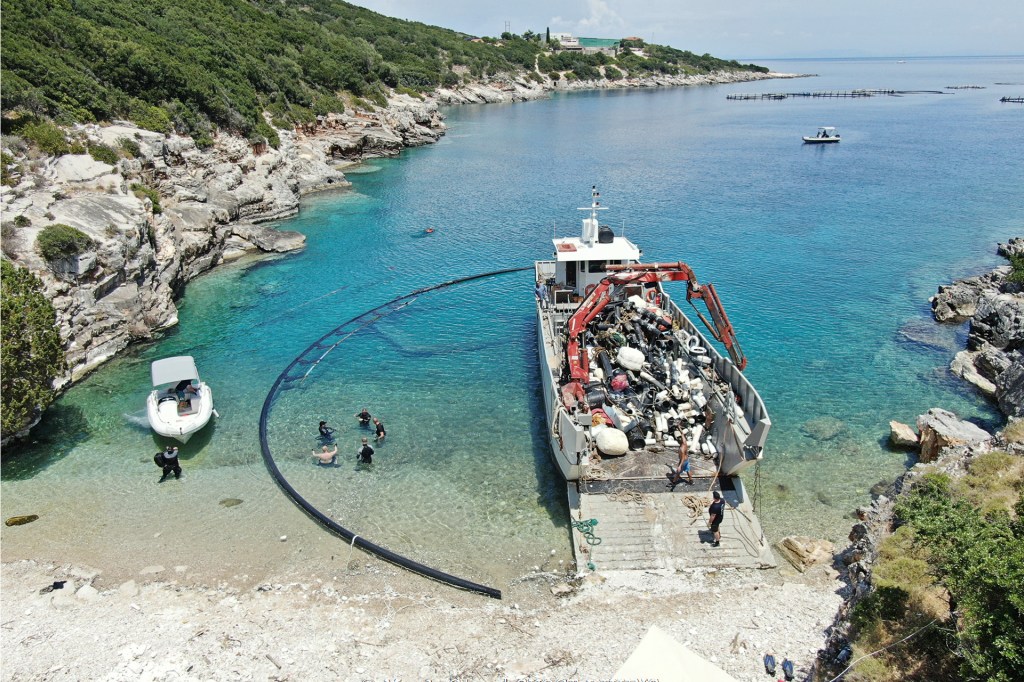
VICTORY! A Healthy Seas crew finishes clearing an abandoned fish farm on the west coast of Greece.
MARK STAP
Taking Back the Beach
Ghost farms are ugly, and they’re dangerous for people and marine animals. Swimmers can hurt themselves on the debris, and marine animals can get tangled in the nets. The garbage also affects the local economy. Trash-filled waters discourage tourism. And they make it harder for independent fishermen to make a living.
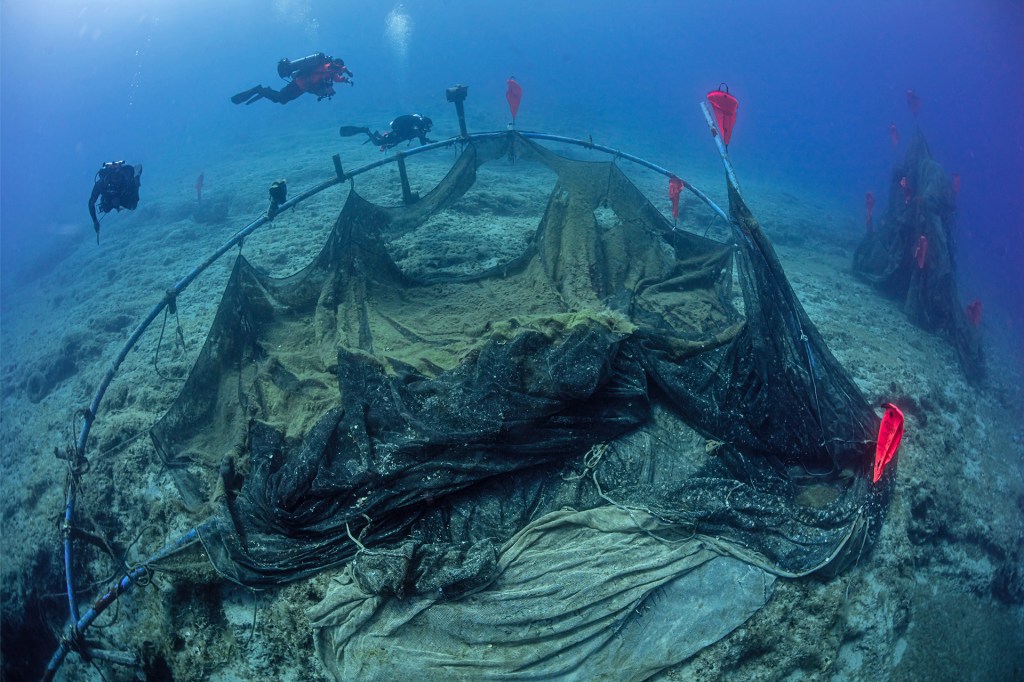
LEFT BEHIND The Healthy Seas team gets a closer look at an abandoned fish farm, which has started to decay on the ocean floor.
COR KUYVENHOVEN
These hazards are part of what inspired Operation Ghost Farms. “By tackling ghost farms,” the Healthy Seas website says, “we aim to rejuvenate rejuvenate to make something fresh or new again (verb) local ecosystems, support affected communities, and raise awareness of the broader environmental impact.”
In 2021, residents of Ithaca, a Greek island in the Ionian Sea, reached out to Healthy Seas for help. “They told us, ‘There is a mess here,’” Samara Croci told TIME for Kids. She’s the communications manager for Healthy Seas. The Ithaca locals explained that a fish farm had shut down 10 years ago. The farm’s old equipment had been sitting in the water ever since. “The litter was spreading everywhere,” Croci says.
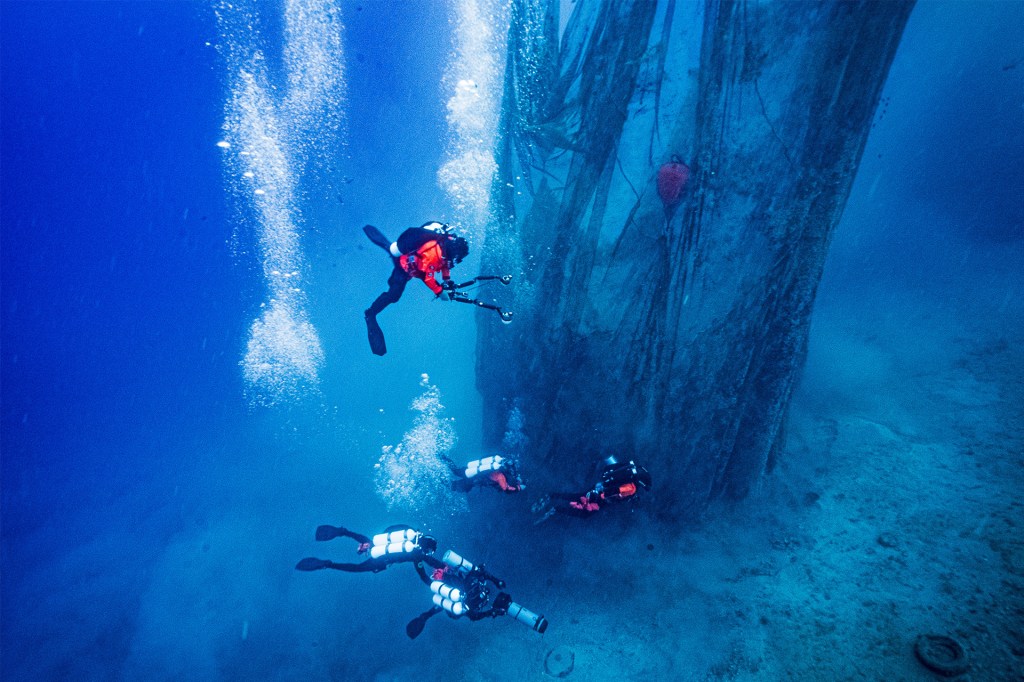
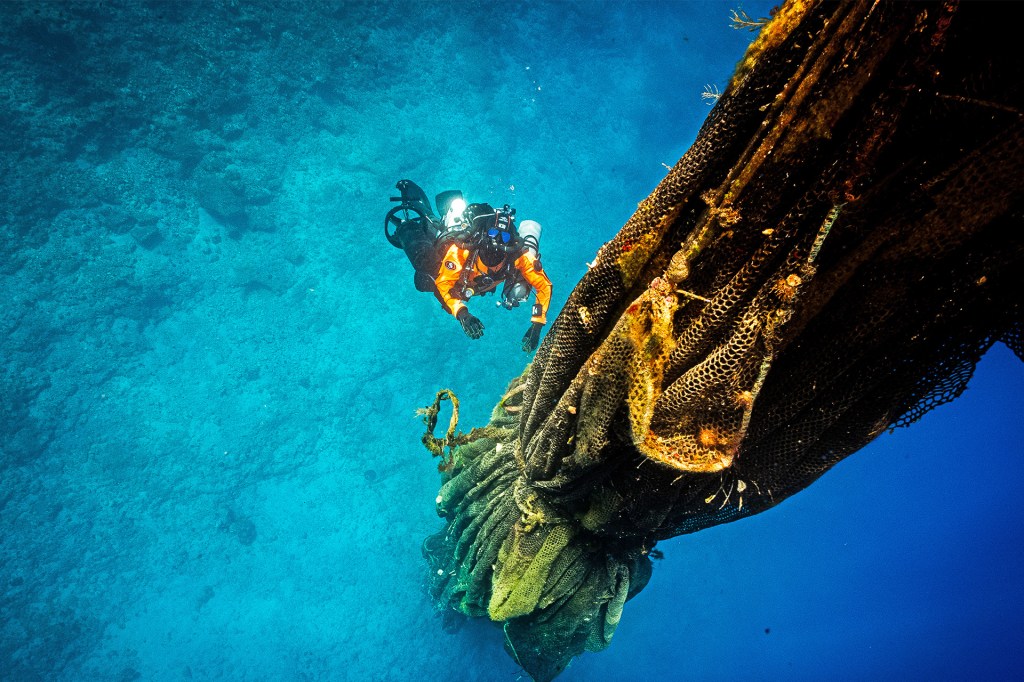
DEEP DIVE Healthy Seas divers remove an abandoned net from the seafloor.
ROGIER VISSER
Healthy Seas organized an eight-day cleanup with 45 participants. Among them were 20 divers, who plunged into the water to extract the old fishing equipment. That first operation collected more than 167,000 pounds of garbage, across four beaches. That included nearly 84,000 pounds of plastic.
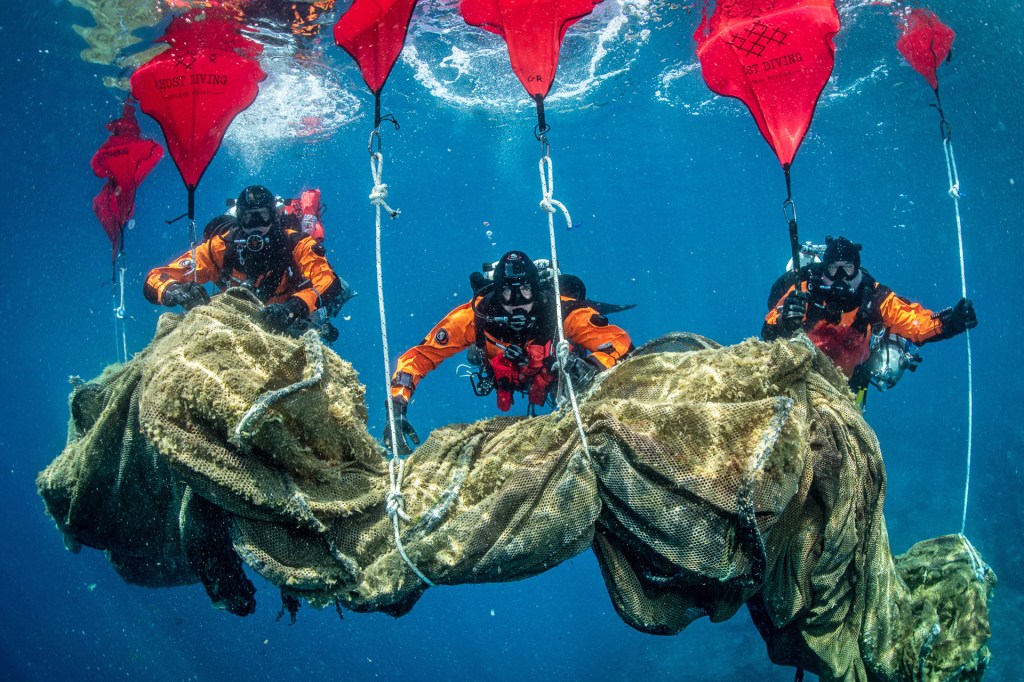
TEAM EFFORT Divers retrieve a “ghost net.” These large fishing nets are left in the ocean, where they can harm marine life.
COR KUYVENHOVEN
Rising Tide
Healthy Seas continues to work with communities in need of a fish-farm cleanup. First, the organization maps out abandoned fish farms. Then group leaders check in with local authorities. “There is a whole process of asking for permission to do the cleanup,” Croci says. The group then plans the cleanup and recruits local volunteers. Afterward, it recycles as much of the recovered equipment as possible.
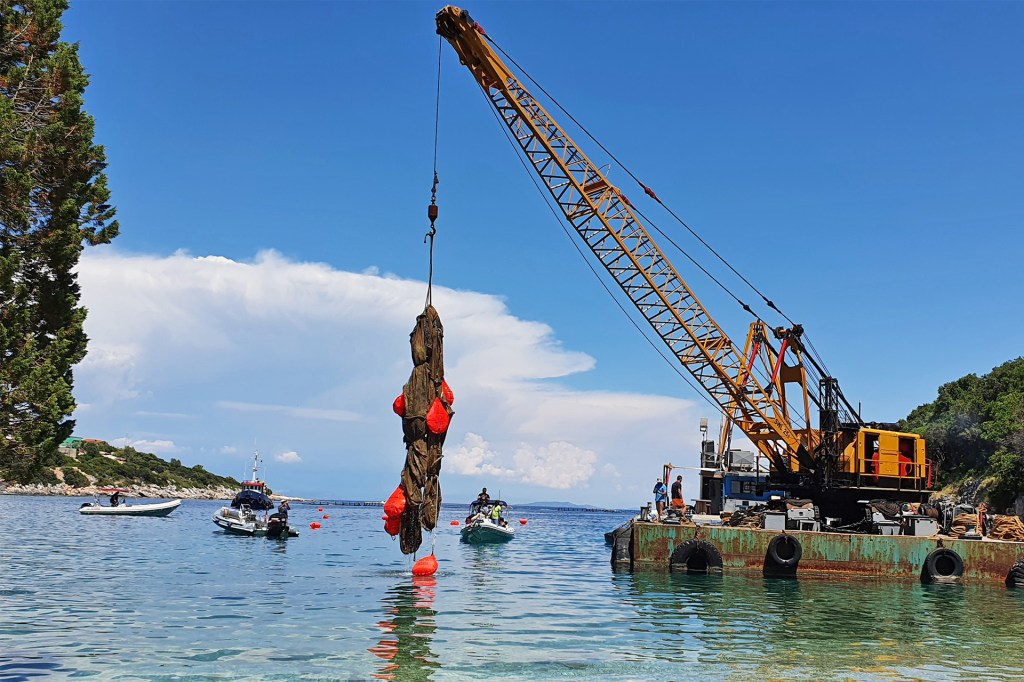
TONS OF TRASH Construction equipment is used to remove some of the heavy fish-farming debris.
VERONIKA MIKOSHealthy Seas likes to educate young people about the importance of keeping beaches clean (see “Making a Difference”). It also raises awareness of the problem. “There is no accountability for [companies] to clean up before they leave,” Croci says. So the group hopes to create “guidelines of how the legislation legislation a set of laws created by the government (noun) should change,” she adds. For example, the government could start by making stricter policies to reduce ghost farms. “Then,” Croci says, “we will try to push it little by little.”
Making a Difference
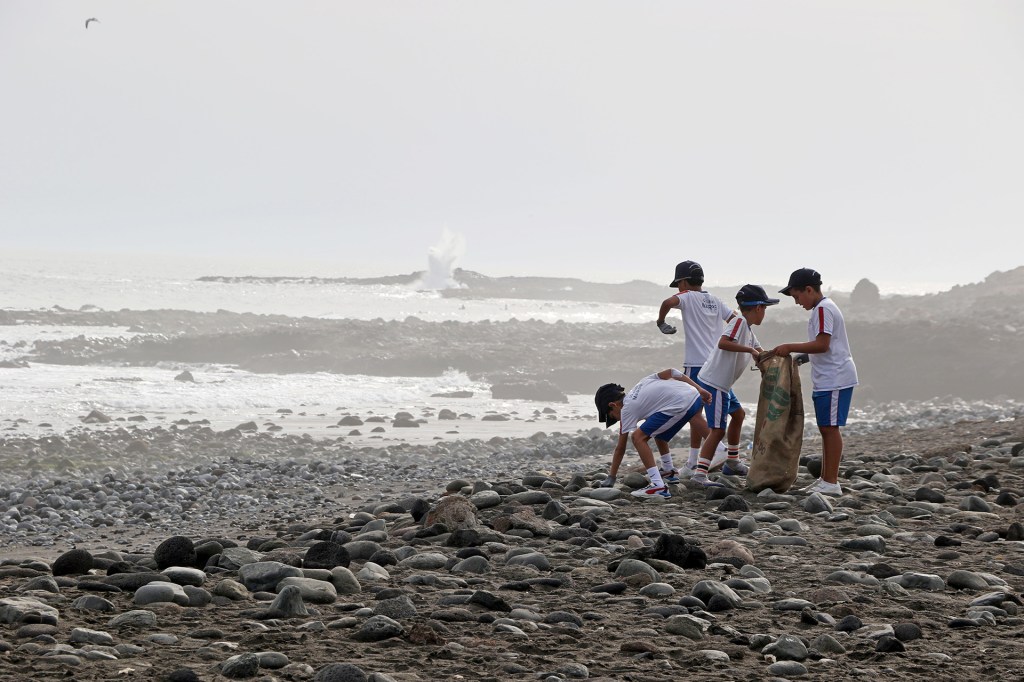
In addition to running Operation Ghost Farms, Healthy Seas raises awareness of other problems affecting the world’s oceans. The group believes this awareness starts in schools. That’s why it works to boost “ocean literacy” by getting students involved in hands-on projects.
In the photo at left, kids pick up trash on a beach in Spain’s Canary Islands. How can kids support clean waterways in your community?
More from Environment



Share a Link
- Click the icon above to copy the url link to your clipboard.
- Paste the link into the location in which you share assignments with students. Examples might include, but are not limited to Canvas, Schoology and Edmodo.



Google Classroom
- Click on the icon above to share the article with a class in your Google Classroom.
- Choose an action. Options might include creating an assignment or asking a question.