



Miles of History
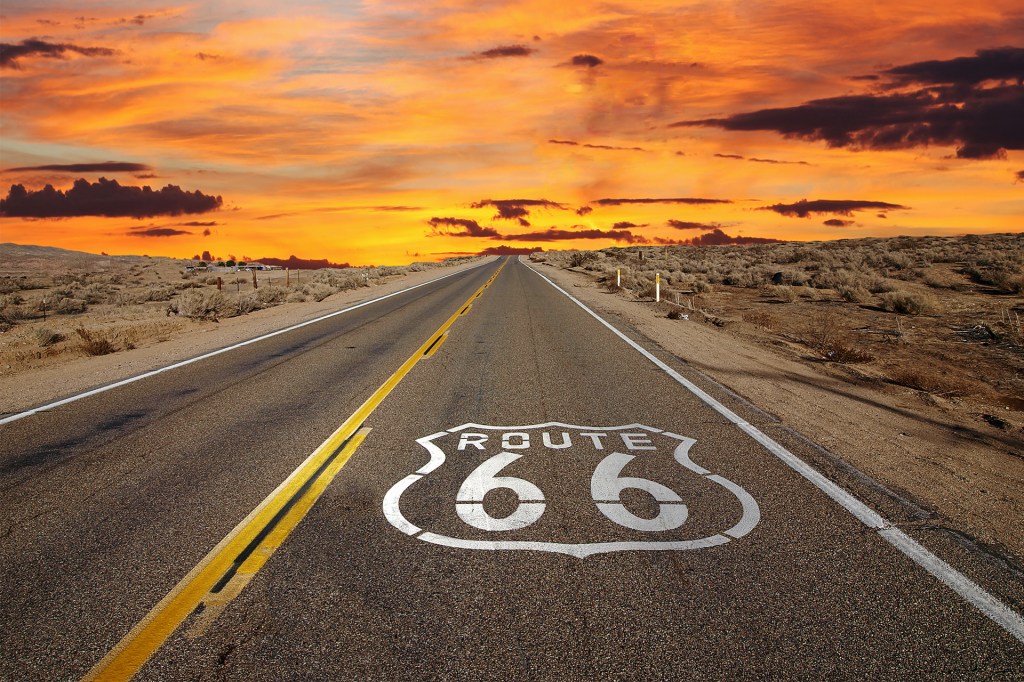
Picture this: You’re driving on the open road. The windows are down, and you’re singing along with the radio as hills, mountains, and deserts fly by. Road-trippers can experience this on Route 66. It’s one of the most famous roads in the United States.
Route 66 spans 2,400 miles. It stretches between Chicago, Illinois, and Santa Monica, California. The route was established in 1926. This year marks its centennial, or 100th anniversary. Although the official birthday is November 11, communities along Route 66 have been celebrating all year.
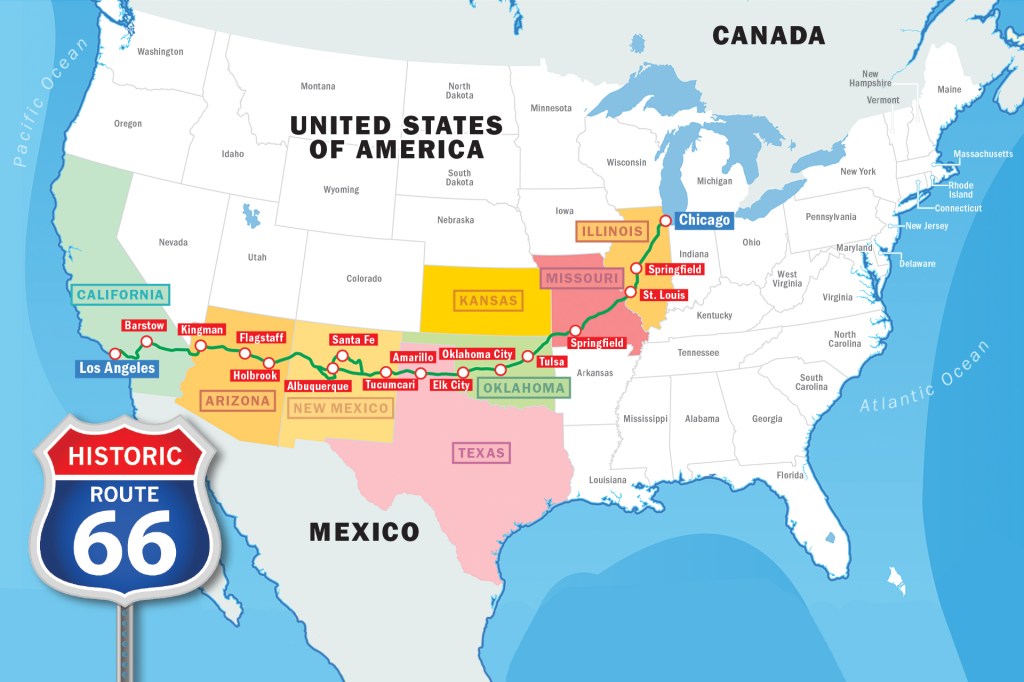
Connecting the Country
When Route 66 was created, cars were fairly new. Roads in America, many of which were originally Native American trails, were mostly made of dirt. They were largely not connected, making it difficult to drive long distances. Route 66 connected a lot of them.
By 1938, the entirety of Route 66 had been paved for easy driving. By the 1950s, traveling via Route 66 was a popular choice for tourists. Families used it for sightseeing. They could stop at gas stations, shops, and motels, checking out quirky attractions along the way (see “Pull Over!”).
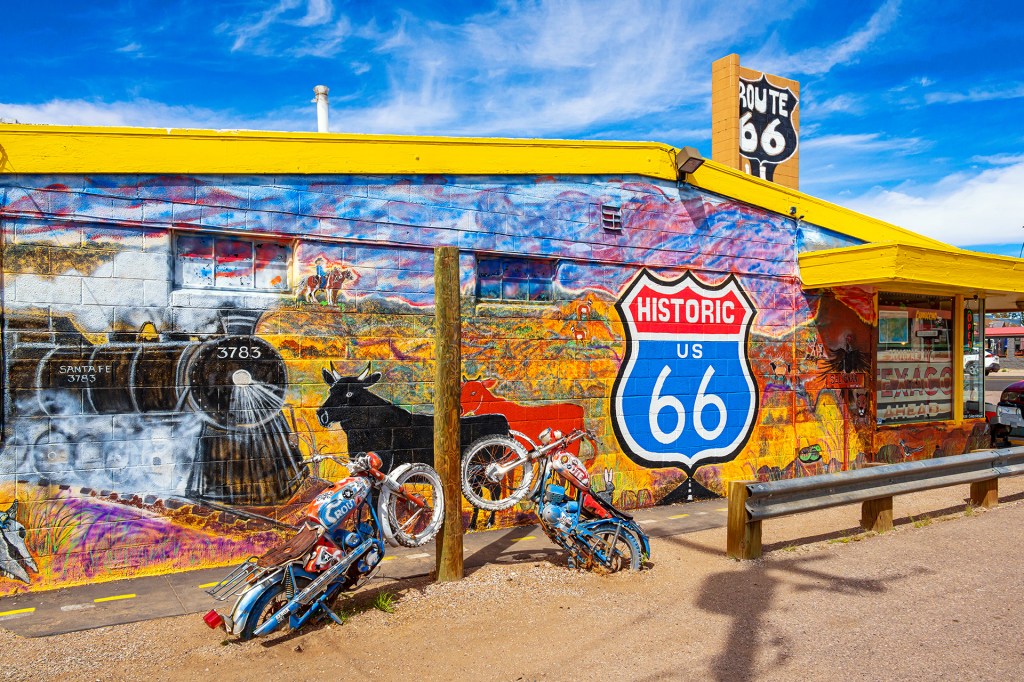
SELFIE SPOT A mural adorns a Route 66 gift shop in Seligman, Arizona. Travelers pull over to buy souvenirs.
JACOBH—GETTY IMAGESToday, Route 66 is considered a historic road. It’s no longer part of the U.S. numbered highway system, which includes newer, faster interstate highways. Certain sections of it are closed, but visitors are still able to drive on much of Route 66 and enjoy the rambling ride.
Driving Tourism
Cities along Route 66 are hosting festivals and parties to celebrate its 100th birthday. Springfield, Missouri, hosted the National Route 66 Centennial Kickoff Celebration in April. The city calls itself the “birthplace of Route 66.” The road was officially named there, says Mark Hecquet. He leads Visit Springfield, Missouri, an organization that promotes tourism.
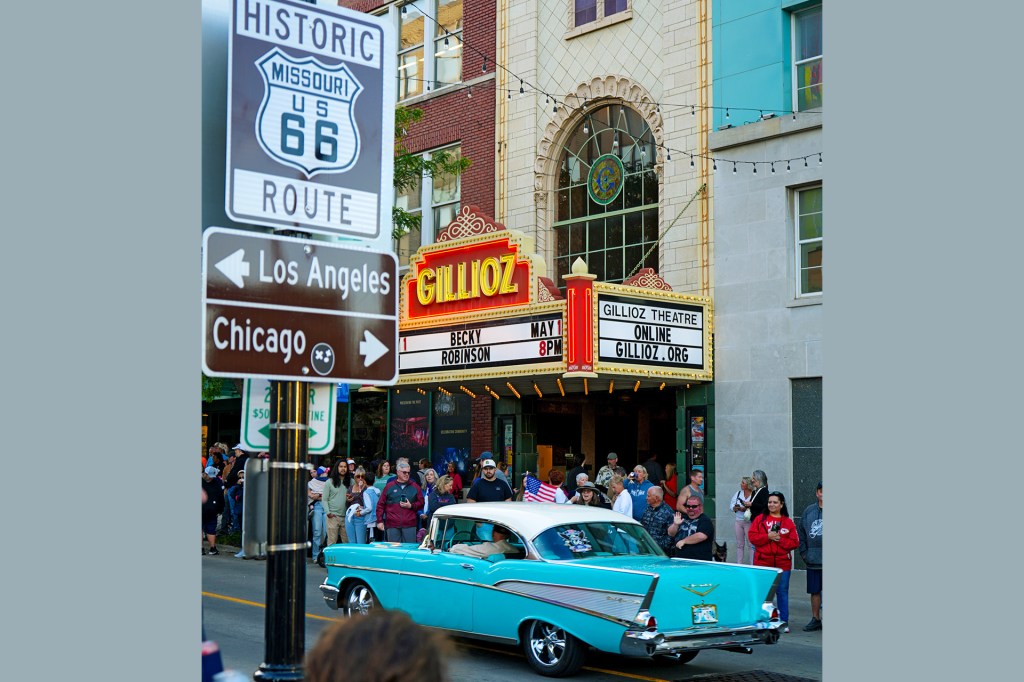
COOL RIDE A classic car cruises through the Route 66 Centennial Kickoff Celebration, in Springfield, Missouri.
COURTESY VISIT SPRINGFIELD, MISSOURIHecquet told TIME for Kids that he hopes Route 66 travelers will stop and spend some time in Springfield before driving on. “We have a lot of other cool things to experience,” he says.
In May, Tulsa, Oklahoma, hosted a classic car parade along the route. With 3,596 drivers participating, it was the largest classic car parade in history. “Route 66 is such a big part of who Tulsa is as a city and our identity,” Jonathan Huskey told TFK. He’s senior director of communications for Tulsa Regional Tourism.
If Springfield is the route’s birthplace, Huskey says, Tulsa is the route’s “capital.” That’s because Cyrus Avery, one of the people who created Route 66, was born in Tulsa.
From rolling prairie to rugged desert, varied landscapes await those who travel on Route 66. Throughout the year, tourists and locals alike will be celebrating the road’s impact. William Thomas works with the U.S. Route 66 Centennial Commission. He wants people to remember the road’s history. “This road is everybody’s road,” he told TFK. “It has connected all of us.”
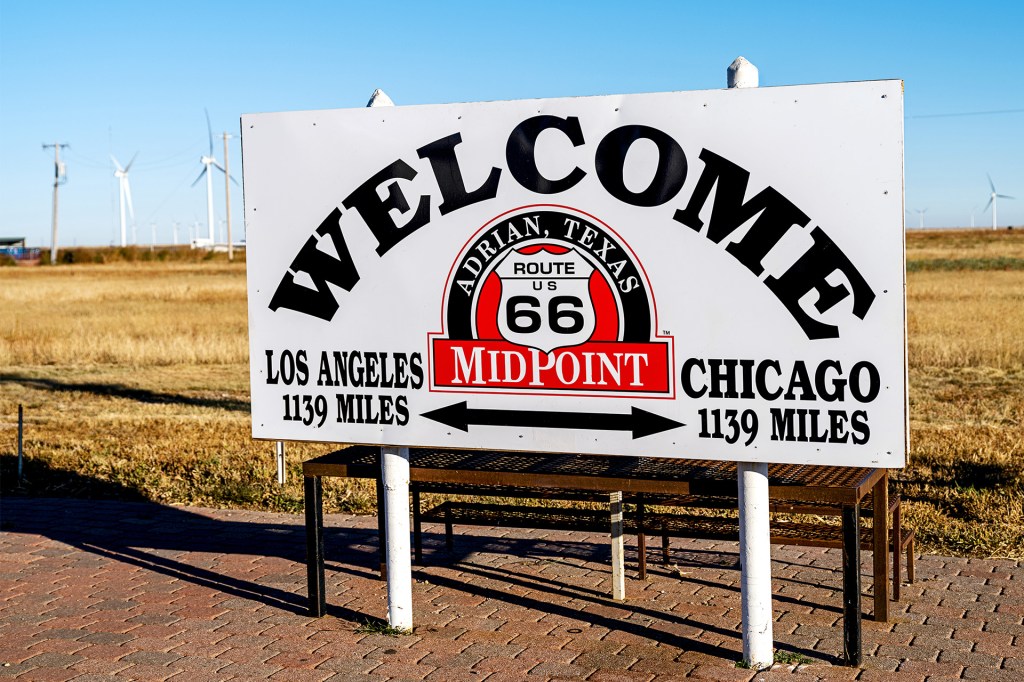
HALFWAY THERE The exact midway point of Route 66 is marked by a sign in Adrian, Texas.
GCHAPEL—GETTY IMAGESPull Over!
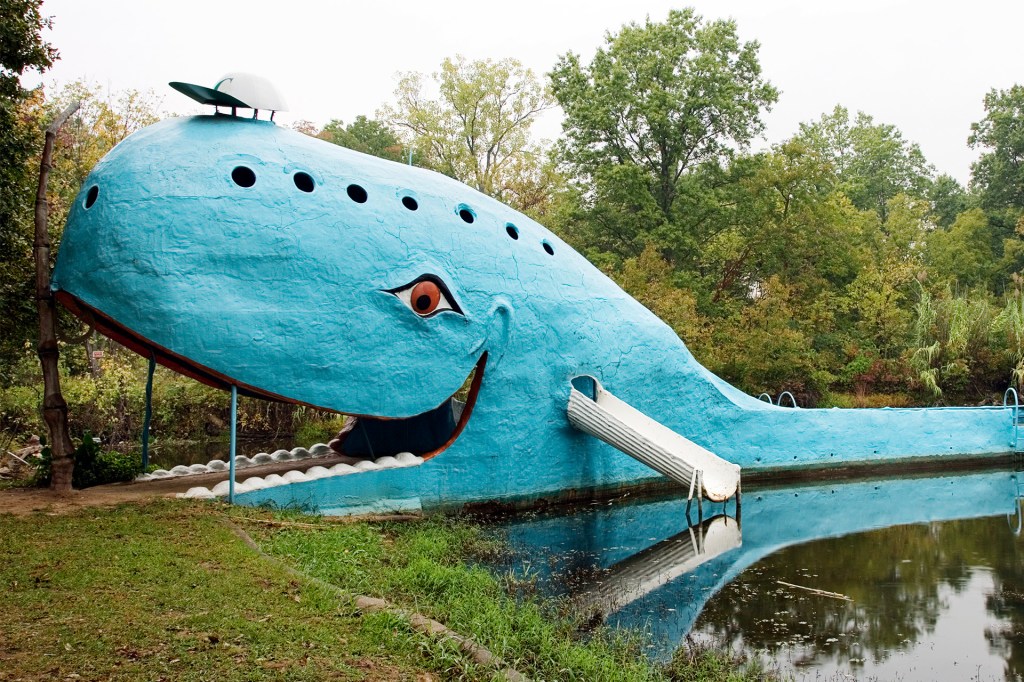
Roadside attractions are a big part of what makes Route 66 special. Whether strange, silly, or historic, these attractions are a treat for drivers in need of a break.
The Blue Whale of Catoosa is a popular attraction. It’s 20 feet tall and 80 feet long. Completed in 1972, this quirky Route 66 landmark is located in Catoosa, Oklahoma. Visitors can snap photos, enjoy a picnic in the surrounding park, and even walk into the whale’s head.
More from United States
Share a Link
- Click the icon above to copy the url link to your clipboard.
- Paste the link into the location in which you share assignments with students. Examples might include, but are not limited to Canvas, Schoology and Edmodo.



Google Classroom
- Click on the icon above to share the article with a class in your Google Classroom.
- Choose an action. Options might include creating an assignment or asking a question.