



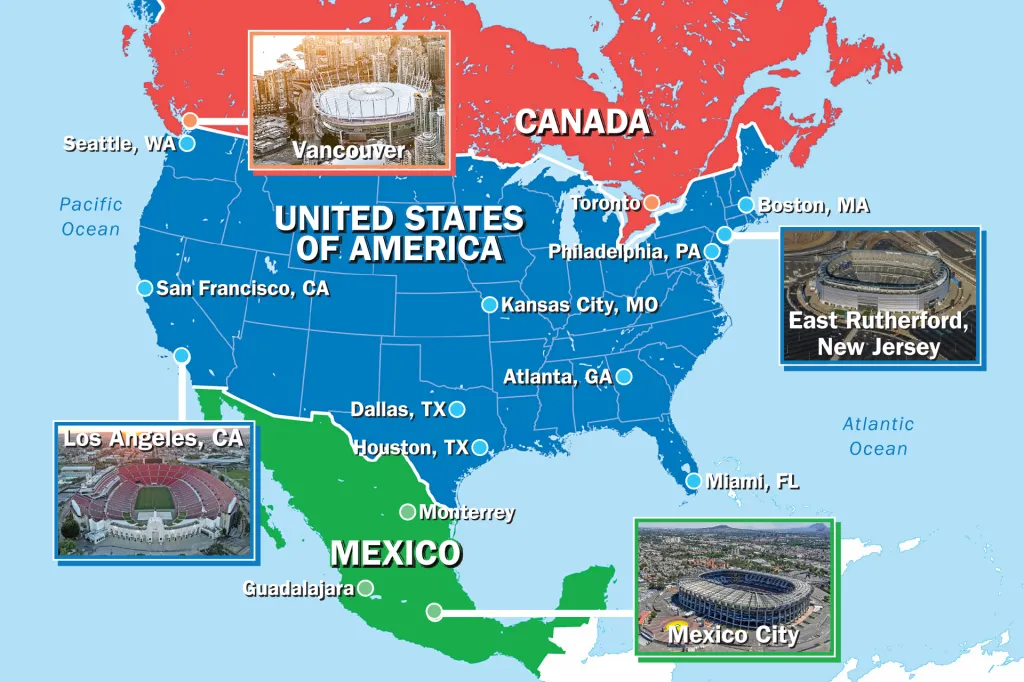
Soccer fans, mark your calendars! The world’s biggest international soccer tournament, the FIFA World Cup, returns this summer. Sixteen cities in Canada, Mexico, and the United States (see map) will host a total of 104 matches match a contest or game (noun) . The action starts with the opening match in Mexico City, on June 11. It ends with the championship match in East Rutherford, New Jersey, on July 19. There, one squad will lift the World Cup trophy.
The first World Cup was played in Uruguay in 1930 (see “Soccer Tradition”). Since then, it has been held every four years, except during World War II, when it was canceled twice. The 2026 World Cup will mark the 23rd edition of the tournament. It will make history as the first to be hosted by three countries. And it will be the first time since 1994 that World Cup matches will be played in the United States.
Thirty-two teams played in the last World Cup, in 2022, in Qatar. This year’s tournament will include 16 more teams, with 48 countries represented, making it the biggest World Cup ever.
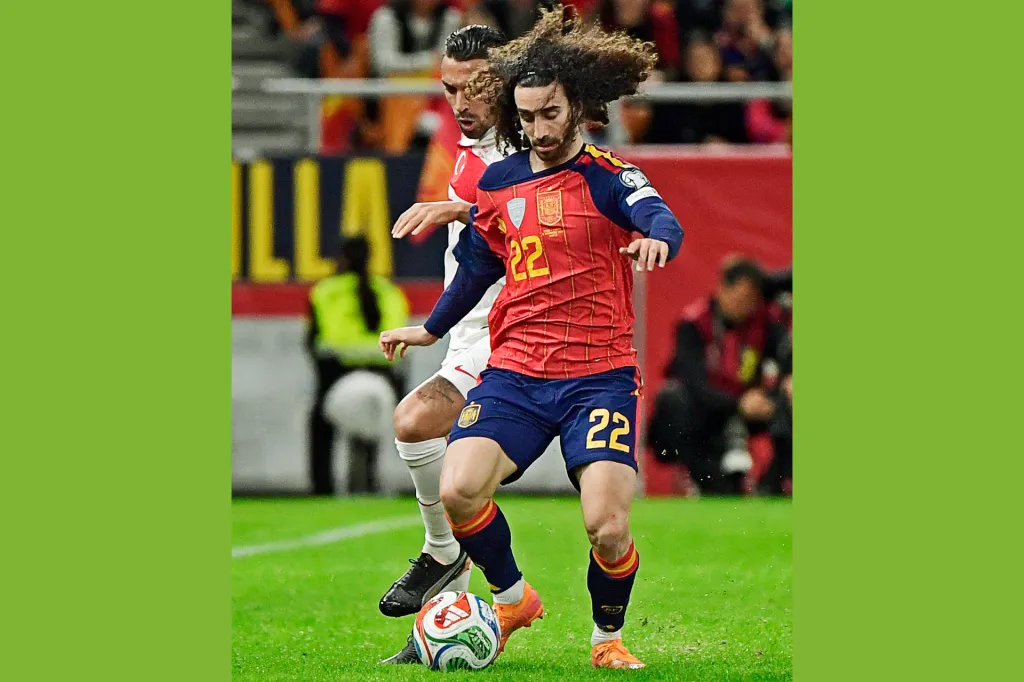
ON THE MOVE Marc Cucurella (right), of Spain, takes the ball at a World Cup qualifying game in November.
CRISTINA QUICLER—AFP/GETTY IMAGES
On the World Stage
Host cities have been preparing for the World Cup for years. In the United States, Houston, Texas; Los Angeles, California; and Miami, Florida, are among those getting ready to welcome fans from around the world.
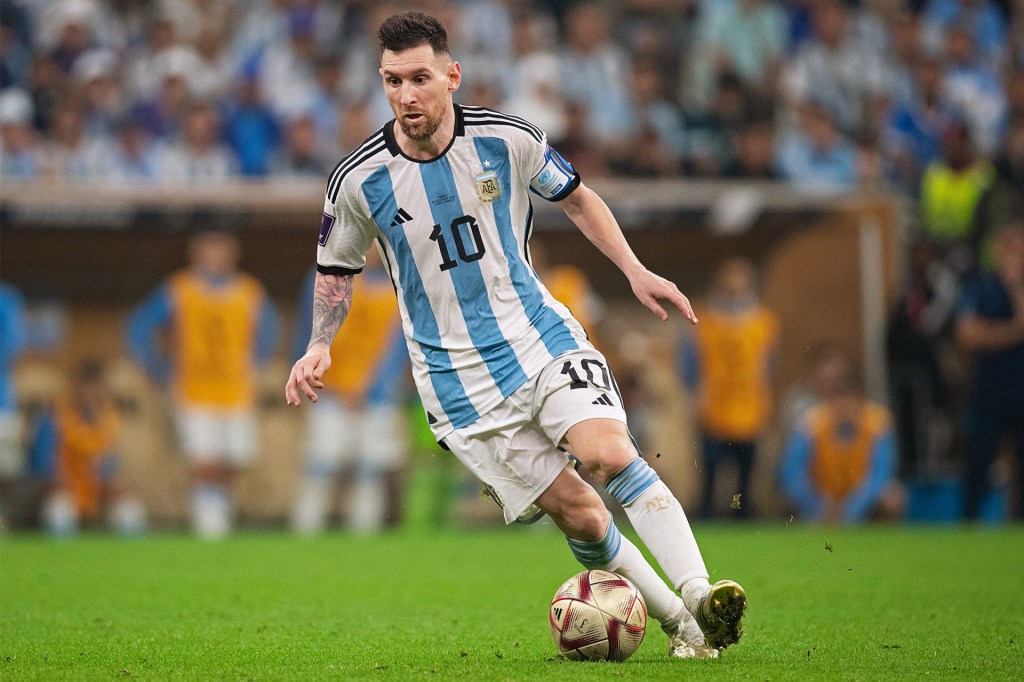
Six matches will be played in Kansas City, Missouri, the smallest host city. Officials there expect 650,000 people to pass through. Among the national teams playing there is Argentina, champion of the 2022 World Cup.
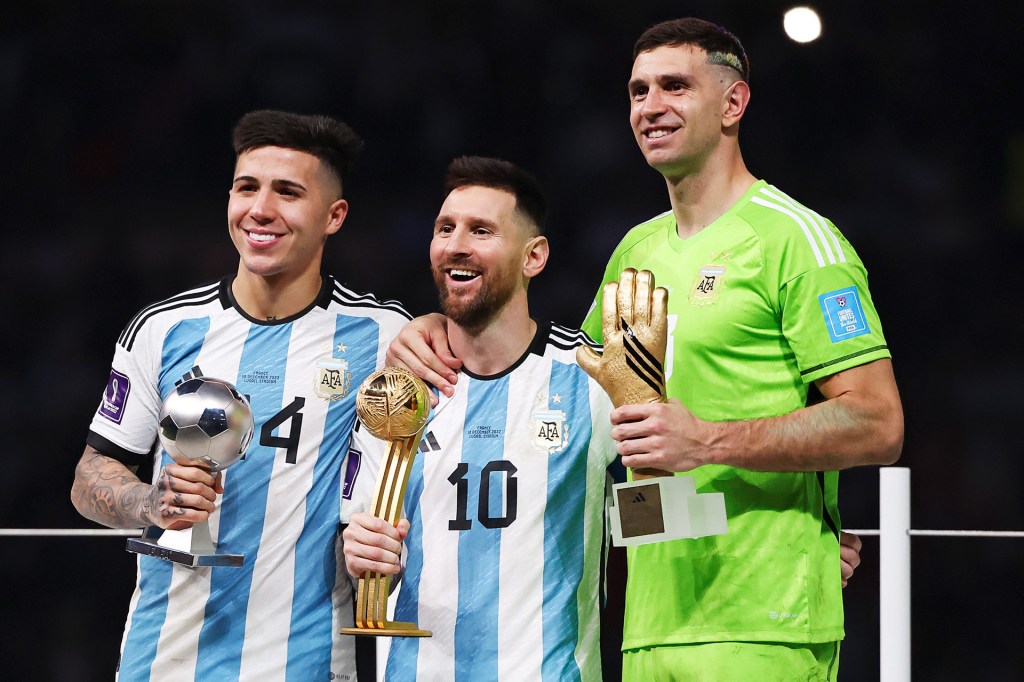
LOOK BACK Lionel Messi (center) holds the best-player trophy at the World Cup in 2022. He’s Argentina’s captain.
JEAN CATUFFE—GETTY IMAGES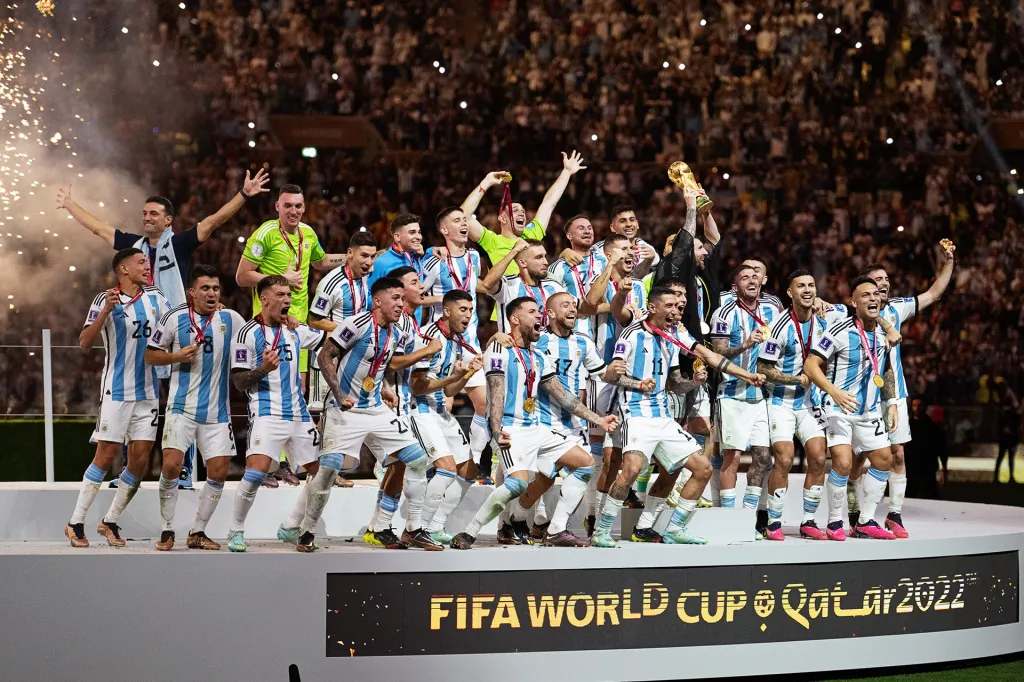
CELEBRATION Argentina’s national team celebrates its World Cup win in Qatar in December 2022.
STEPHEN NADLER—ISI PHOTOS/GETTY IMAGES
Like other hosts, Kansas City is planning a Fan Festival: a gathering spot with big screens where fans can grab food, watch the matches, and celebrate together. To help everyone get around, extra buses will carry spectators, staff, and volunteers to stadiums and events. City leaders are also planning for added security.
Kansas City sees the World Cup as a chance to showcase its culture and traditions to visitors from around the globe. “People here are so excited,” Pam Kramer told TIME for Kids. She’s CEO of KC2026, the organization in charge of preparing Kansas City for the World Cup. “We’ve never hosted a Super Bowl. We’ve never had the Olympics. So for us, the opportunity may be bigger than [for] some of the other host cities.”
Ready to Cheer
Young soccer fans everywhere are looking forward to watching the World Cup. Tobias Oviedo, from Illinois, is one of them. Tobias has played soccer since he was 3, and now, at 11, is a midfielder midfielder a player positioned between the defenders and forwards (noun) on his youth team. Tobias says that while watching World Cup matches, he’ll be paying attention to “good passes, good shots, and teamwork.” Above all, he’s ready to enjoy the experience. “I love seeing the players just play,” he says. “I just like soccer.”
Tobias will be rooting for Spain. He and his family have visited the country and attended matches there. Spain is considered one of the strongest teams in the tournament, with a good chance of winning. But once the players take the field, anything can happen. What team will you be rooting for?
Soccer Tradition
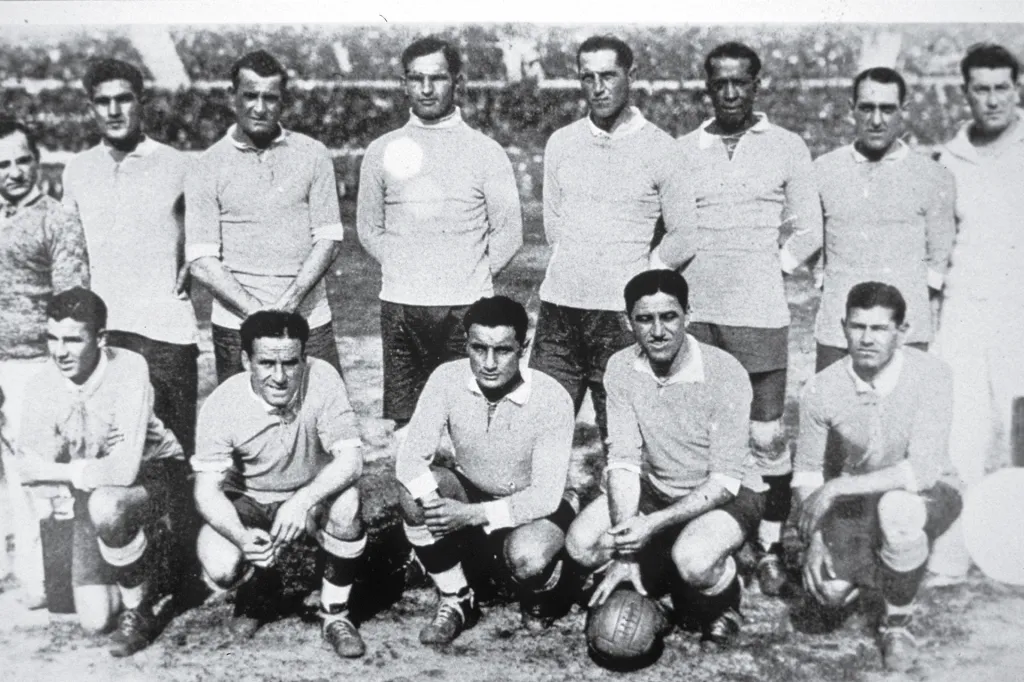
The first FIFA World Cup took place in Uruguay in 1930. Thirteen teams competed, most traveling there on a long journey by ship. The host country built a huge new stadium, Estadio Centenario, for the tournament. In the championship match, Uruguay (the pictured team) defeated Argentina 4–2 in front of a crowd of nearly 70,000 fans to become soccer’s first world champion. The country declared the following day a national holiday.
More from World



Share a Link
- Click the icon above to copy the url link to your clipboard.
- Paste the link into the location in which you share assignments with students. Examples might include, but are not limited to Canvas, Schoology and Edmodo.



Google Classroom
- Click on the icon above to share the article with a class in your Google Classroom.
- Choose an action. Options might include creating an assignment or asking a question.