




Birds in Trouble
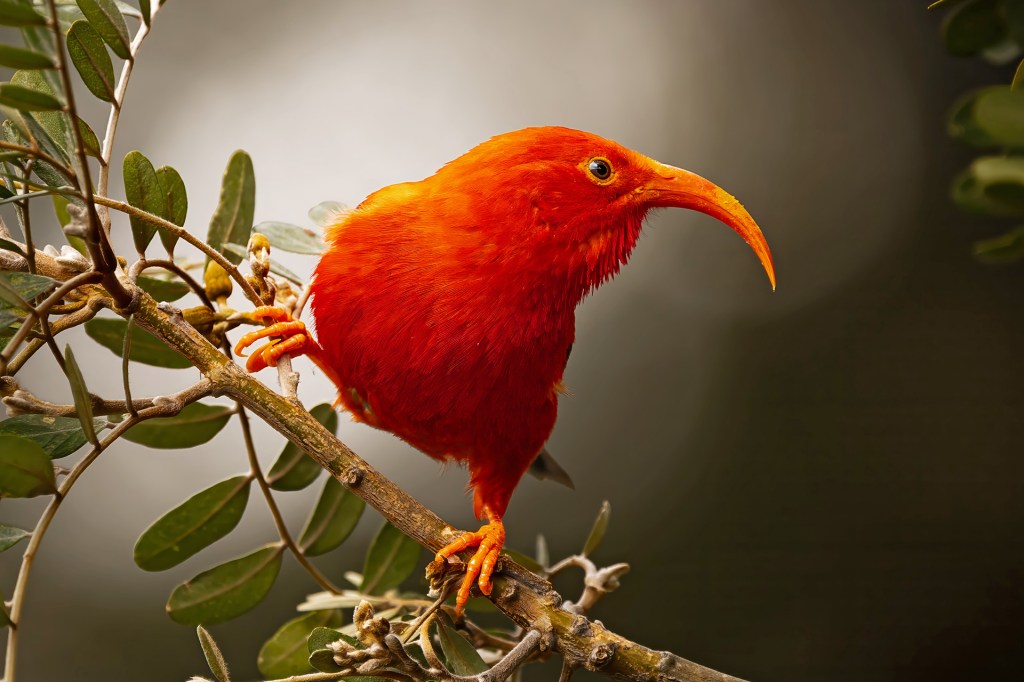
Twice a week, Adam Knox drives to a forest high in the mountains of Hawaii. “This is where the native birds live,” he tells TIME for Kids.
He is talking about honeycreepers. They live only in Hawaii. They are in danger because of a disease that is spread by mosquitoes. It can be deadly for the birds.
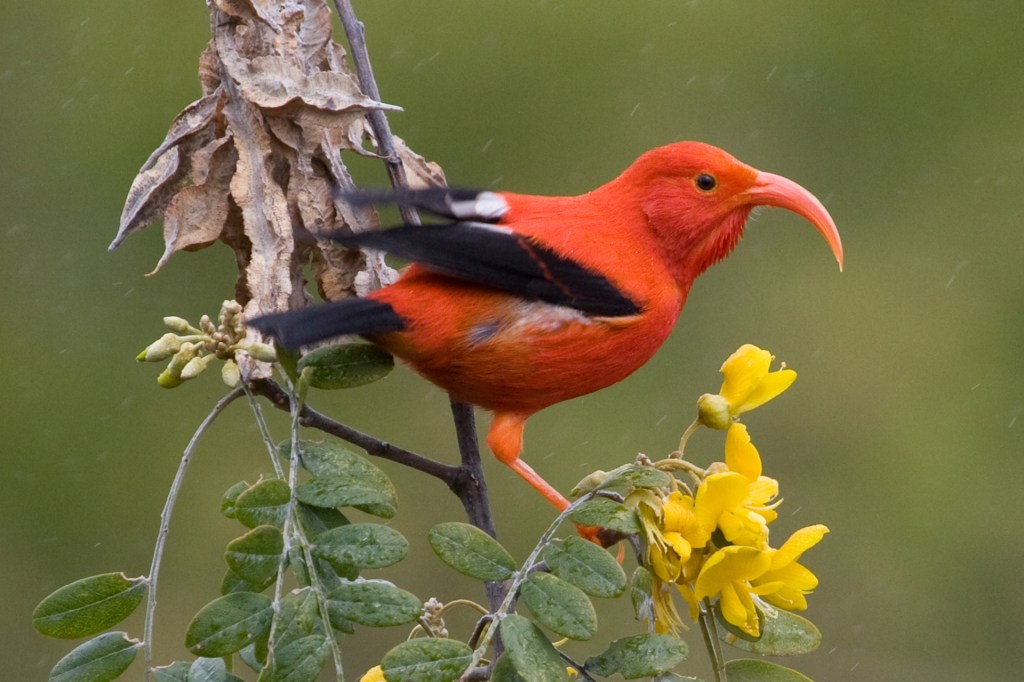
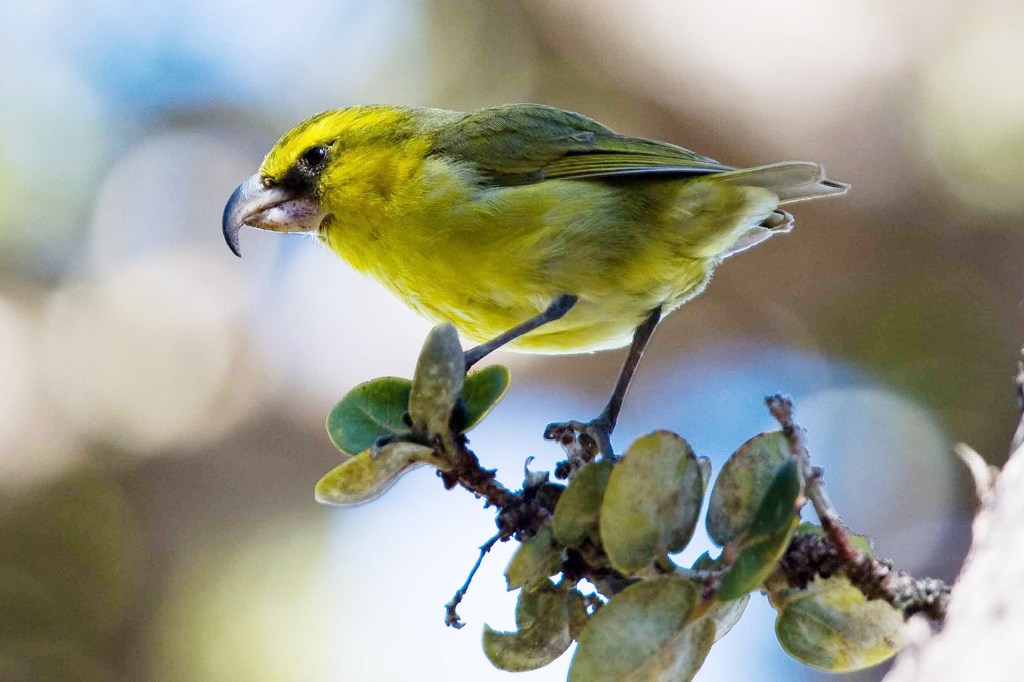
Honeycreepers live only in Hawaii. There used to be more than 50 types. “Now there are only 17,” Chris Farmer says. He works for the American Bird Conservancy.
ROBBY KOHLEYKnox is a drone pilot. He works for the American Bird Conservancy (ABC). The group is working with others to save honeycreepers.
Using Technology
Mosquitoes are not native to Hawaii. And they are not good neighbors. A single mosquito bite can kill a honeycreeper.
How are the groups saving birds from mosquitoes? By sending out more mosquitoes! This may sound strange. But it is working. “This technique uses mosquitoes to fight mosquitoes,” Christa Seidl says. She is a scientist. She works for the Maui Forest Bird Recovery Project.
The mosquitoes are dropped into the forest in pods. Pods are loaded into a drone at the launch site. After liftoff, Knox releases them using a remote control. Each pod holds 1,000 mosquitoes. The insects are all males. They do not bite.
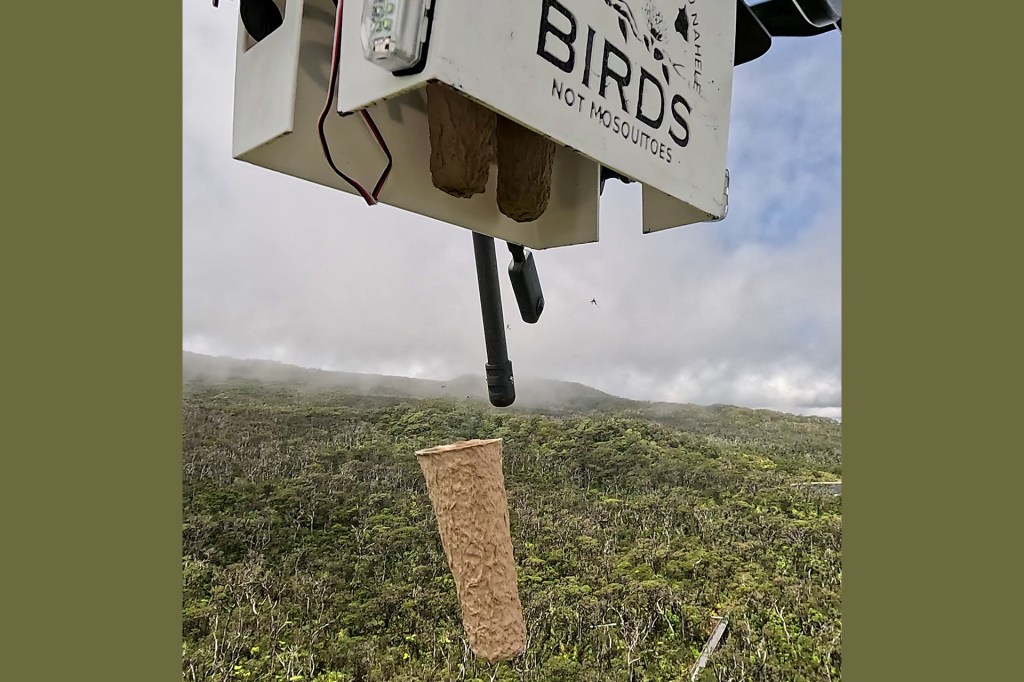
This drone is carrying a pod of 1,000 mosquitoes. They will be dropped into a Hawaiian forest.
ADAM KNOX—AMERICAN BIRD CONSERVANCYThe mosquitoes were born in a lab. When they mate with wild ones, the eggs will not hatch. “This lowers the mosquito population over time,” Seidl says. The birds will have a chance to bounce back.
On a Mission

Forests in Hawaii are home to lots of wildlife. Many bird species are unique to the area.
IAN NELSONNo one knows how long the project will take. Until it is done, the drone drops will continue. “Everyone is so committed and works so hard,” Chris Farmer says. He is ABC’s Hawaii program director. “It is our responsibility, our kuleana, to save these birds.”
More from Animals




Share a Link
- Click the icon above to copy the url link to your clipboard.
- Paste the link into the location in which you share assignments with students. Examples might include, but are not limited to Canvas, Schoology and Edmodo.



Google Classroom
- Click on the icon above to share the article with a class in your Google Classroom.
- Choose an action. Options might include creating an assignment or asking a question.