




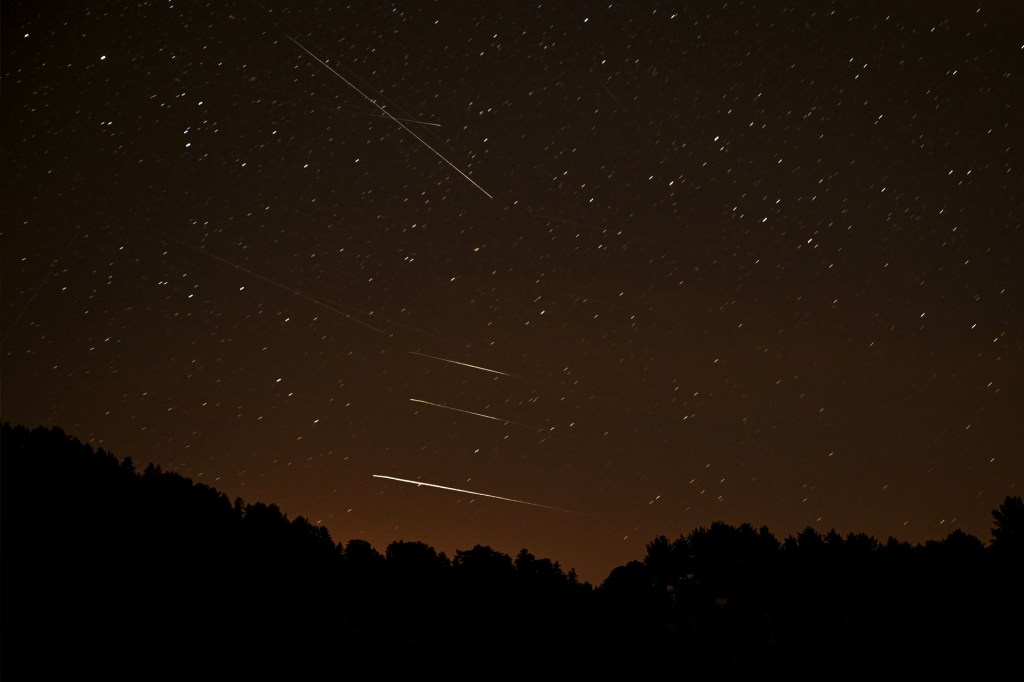
You don’t have to wait until Independence Day for a light show in the sky. A natural fireworks show is happening this week: the Lyrids meteor shower, which experts say will probably continue through April 30.
Meteor showers are a natural occurrence. As Earth swings around the sun, it sometimes passes through the debris—rocks, dust, and sand—trailing a comet. That debris burns up in Earth’s atmosphere. As it does, it creates a streak of light, or a shooting star, visible in the night sky. (Shooting stars aren’t stars. They’re meteors. When you see one, you’re seeing small pieces of rock or dust from space entering Earth’s atmosphere at very high speeds.)
The Lyrids meteor shower comes every year. It’s typically visible from Earth during the second half of April. This shower is caused by debris from a comet named Thatcher, which orbits the sun. When Earth passes through its debris, the Lyrids shower occurs. This year, the Lyrids have been active since April 14.
If you want to catch the show, you’ll need a clear sky with no moon or clouds. You’ll also need to stay up late. The American Meteor Society website explains that these showers are best seen after midnight.
Michelle Nichols is the director of public observing at the Adler Planetarium, in Chicago, Illinois. She recommends avoiding telescopes or binoculars while watching a meteor shower. “You just need your eyes and, ideally, a dark sky,” she told the New York Times.
More from Science
Share a Link
- Click the icon above to copy the url link to your clipboard.
- Paste the link into the location in which you share assignments with students. Examples might include, but are not limited to Canvas, Schoology and Edmodo.



Google Classroom
- Click on the icon above to share the article with a class in your Google Classroom.
- Choose an action. Options might include creating an assignment or asking a question.