




TFK Explains: El Niño
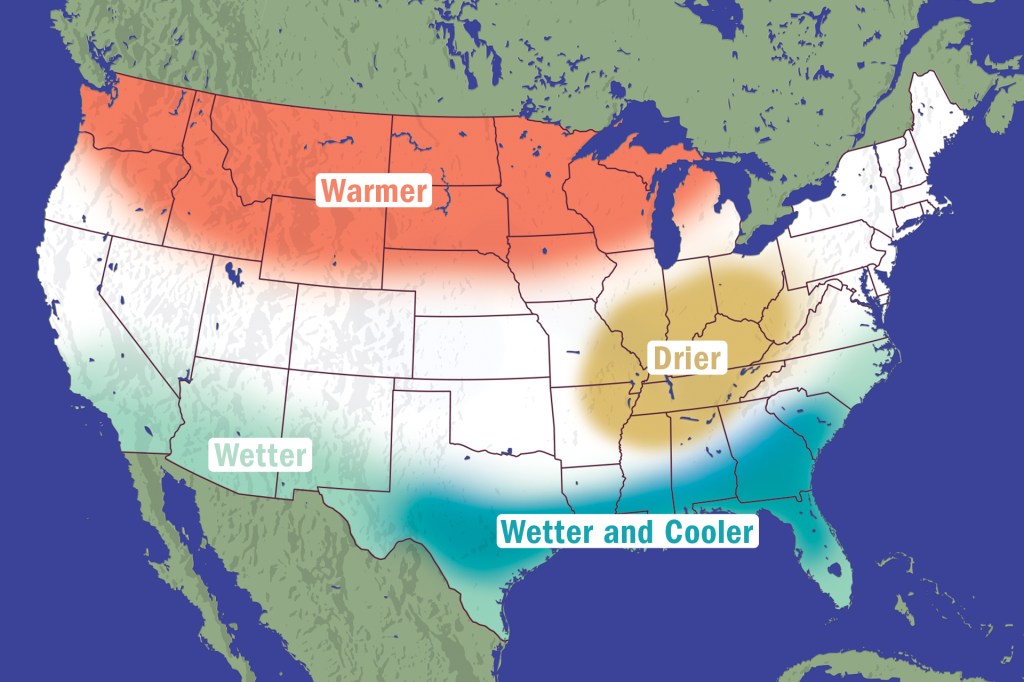
El Niño has arrived, and experts predict it might be the strongest in history. Some are calling it a Super El Niño. TIME’s Simmone Shah explains.
What is El Niño?
El Niño is a huge natural weather pattern. It occurs, on average, every two to seven years. It starts in the Pacific Ocean. But it affects the weather all over the world.
The pattern is caused by shifting winds. They’re called trade winds. Usually, they push warm water to the western side of the Pacific. The warm water gathers near Indonesia and Australia. Cold water takes its place in the east, near South America. The cold water rises from the deep ocean and gathers in the east.
During an El Niño year, the opposite happens. Trade winds slow down. They might even blow in reverse. Warm water moves to the eastern side of the ocean. This changes weather in many places. The effects typically last nine to 12 months. They sometimes last longer.
What weather will this El Niño bring?
In the U.S., El Niño often brings warmer winters to the northern states. It might bring more rain and snow to southern states. El Niño also increases risk of severe weather.
This year’s El Niño began forming in the early summer. It’s expected to affect weather into 2027.
What makes this a Super El Niño?
This year’s El Niño is getting stronger fast. Experts say its effects could be bigger than usual. “This El Niño could be a record-setting event,” says Erin Coughlan de Perez, associate professor of climate science at Tufts University, in Massachusetts.
How can people prepare?
Adults can sign up for emergency alerts and pay attention to local forecasts. Cities can also prepare. For example, leaders in the southern U.S. might set up warming centers to prepare for cold weather.
Stop and Think!
WHY did the author write this story in a question-and-answer format? How might this help a reader understand the information?
More from Environment



Share a Link
- Click the icon above to copy the url link to your clipboard.
- Paste the link into the location in which you share assignments with students. Examples might include, but are not limited to Canvas, Schoology and Edmodo.



Google Classroom
- Click on the icon above to share the article with a class in your Google Classroom.
- Choose an action. Options might include creating an assignment or asking a question.