





From a research ship off the coast of Argentina in summer 2025, Daniel Lauretta watched a robot sink into the dark ocean. The robot, SuBastian, was a remotely operated vehicle. It was carrying cameras to the bottom of the Atlantic Ocean’s Mar del Plata Canyon. SuBastian would have to travel quite a distance. The underwater valley is more than twice as deep as the Grand Canyon.

OUT AT SEA Research ship Falkor (too) hosted the SuBastian and the scientists on their mission.
MISHA VALLEJO PRUT—SCHMIDT OCEAN INSTITUTEWhen SuBastian got to the seafloor, Lauretta felt worried. “The first thing I saw, once the cameras reached the bottom, was just soft sediment,” he told TIME for Kids. “There were very few animals.”
Turns out, there was no need to worry. Over 21 days, SuBastian dove 17 times. It found coral reefs, sea stars, and animals no person had ever seen. About a year later, a team of scientists examined the mission’s findings. In September, it announced that it was able to identify 57 never-seen marine species.
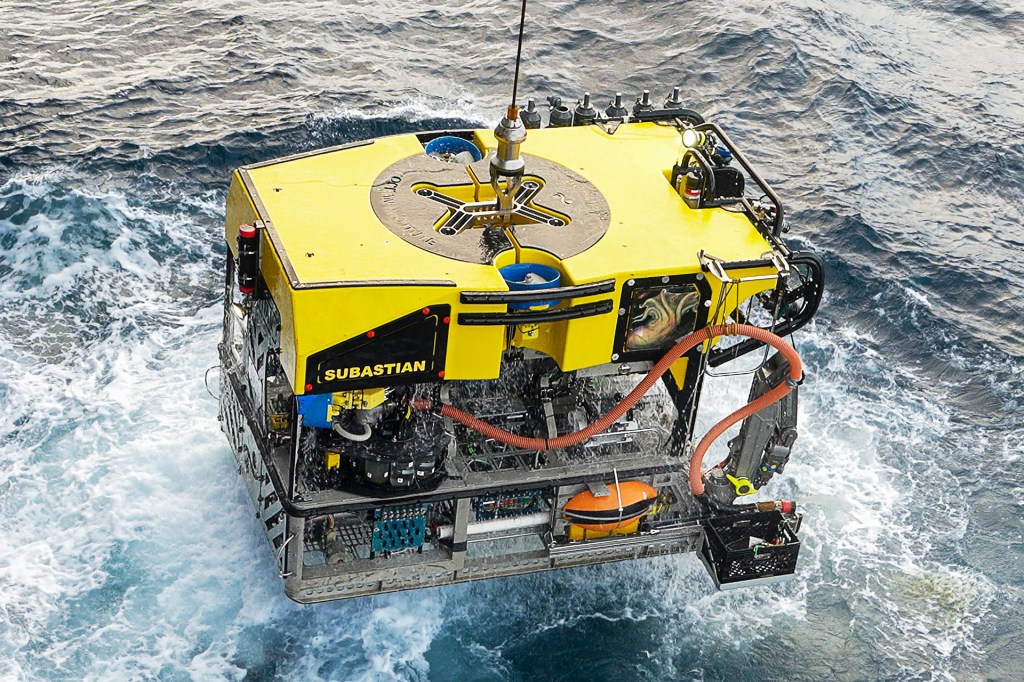
RESURFACING SuBastian is pulled from the ocean after one of its 17 dives during the 2025 expedition.
MISHA VALLEJO PRUT—SCHMIDT OCEAN INSTITUTELive from the Deep
Lauretta is a researcher at the Argentine Museum of Natural Sciences, in Buenos Aires. He led the expedition’s science team, which was run by the Schmidt Ocean Institute. As Lauretta watched SuBastian explore, the cameras streamed live video to the Internet. More than 4 million people tuned in.
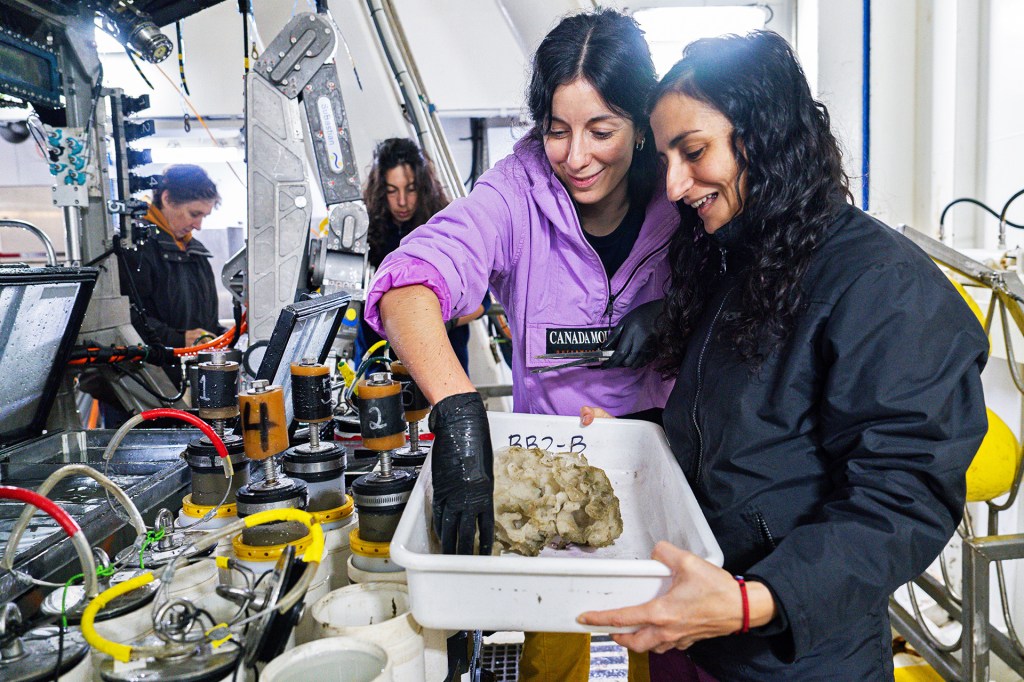
TEAM EFFORT Researchers Renata Pertossi and Noelia Sánchez retrieve samples that SuBastian collected during a dive on August 1, 2025.
MISHA VALLEJO PRUT—SCHMIDT OCEAN INSTITUTESuddenly, a bright-orange sea star rolled into view. Viewers thought it looked like a character from SpongeBob SquarePants. “As soon as it appeared onscreen, the chat exploded with comments about its resemblance to Patrick Star,” Lauretta says. The sea star became famous overnight. It was not a new species, so the scientists left it where it was. But the team collected other animals from the canyon’s depths and took them to the lab. That’s where the real discoveries began.
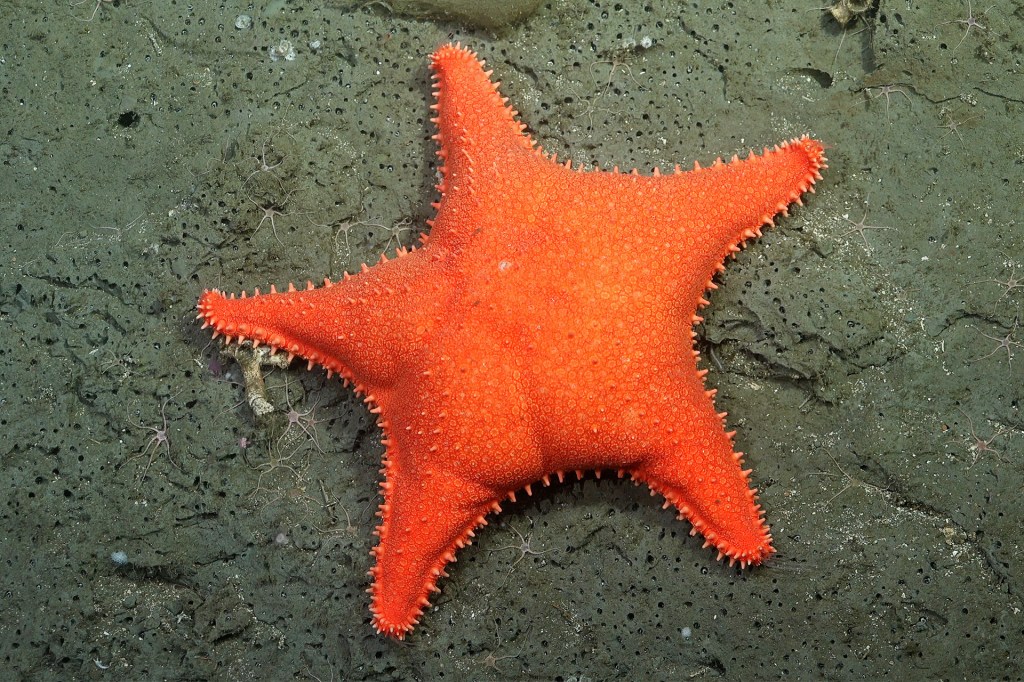
WHO’S THAT STAR? An orange sea star delighted livestream viewers with its resemblance to a cartoon character.
ROV SUBASTIAN/SCHMIDT OCEAN INSTITUTESpecies Detectives
In July 2026, 20 taxonomists taxonomist a scientist who classifies plants and animals (noun) and other researchers gathered in Buenos Aires, Argentina, for two weeks to study the animals from the canyon. Their job was to figure out which ones were new to science. “It’s like being a detective,” says Francisco Solís-Marín, a sea cucumber expert. To learn whether an animal is a new discovery, he compares its shape and body parts to those of every known species. Sometimes, he checks its DNA.
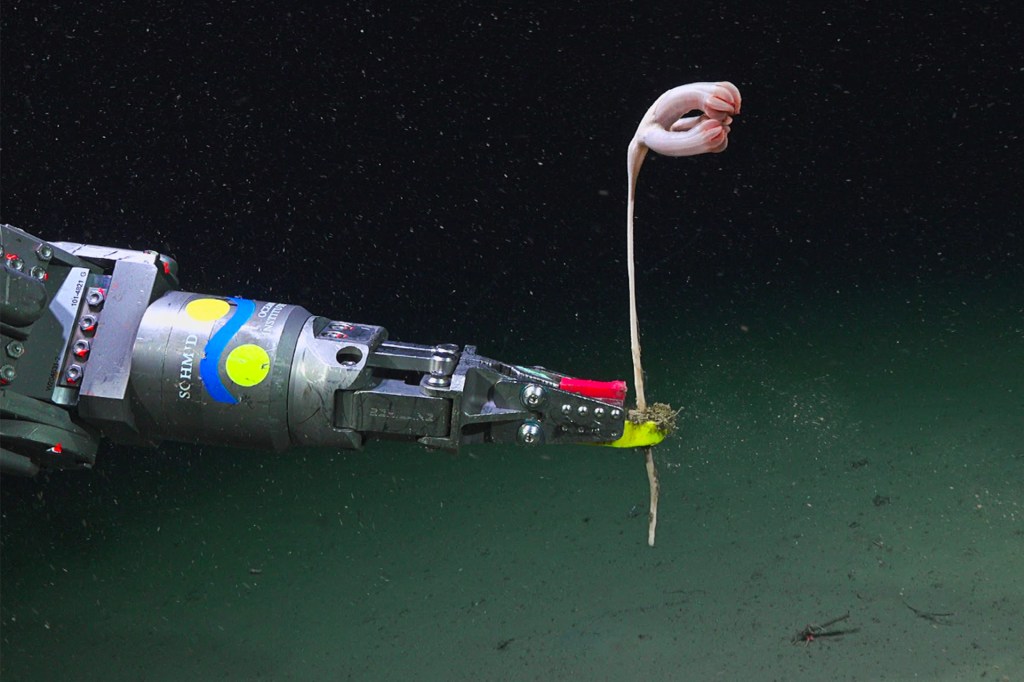
DEEP DISCOVERY One of SuBastian’s arms holds a sea pen (Pseudumbellula sp.), one of the newly discovered species.
ROV SUBASTIAN/SCHMIDT OCEAN INSTITUTEOne newly discovered sea cucumber is about four inches long and almost transparent. The bumps on its body look like horns. The team called it Loki, after a Marvel character with a horned helmet (see “What’s in a Name?”). “Sea cucumbers are some of the ocean’s little superheroes,” Solís-Marín says. “Some can swim, glow, or defend themselves in amazing ways. They may not have big teeth, like sharks, but they have superpowers of their own.”
The smallest discoveries came from mud: Copepods are tiny crustaceans crustacean a member of a mostly aquatic group of animals with a skeleton on the outside, such as shrimp (noun) . They’re smaller than a grain of rice. Scientists examined only a 10th of the copepod samples, and each one was a new species. “There is still a whole new world to discover,” says Emanuel Pereira, a copepod scientist. Lauretta’s team is heading back in early 2027 to explore a different canyon. “I hope to find many new species,” he says.
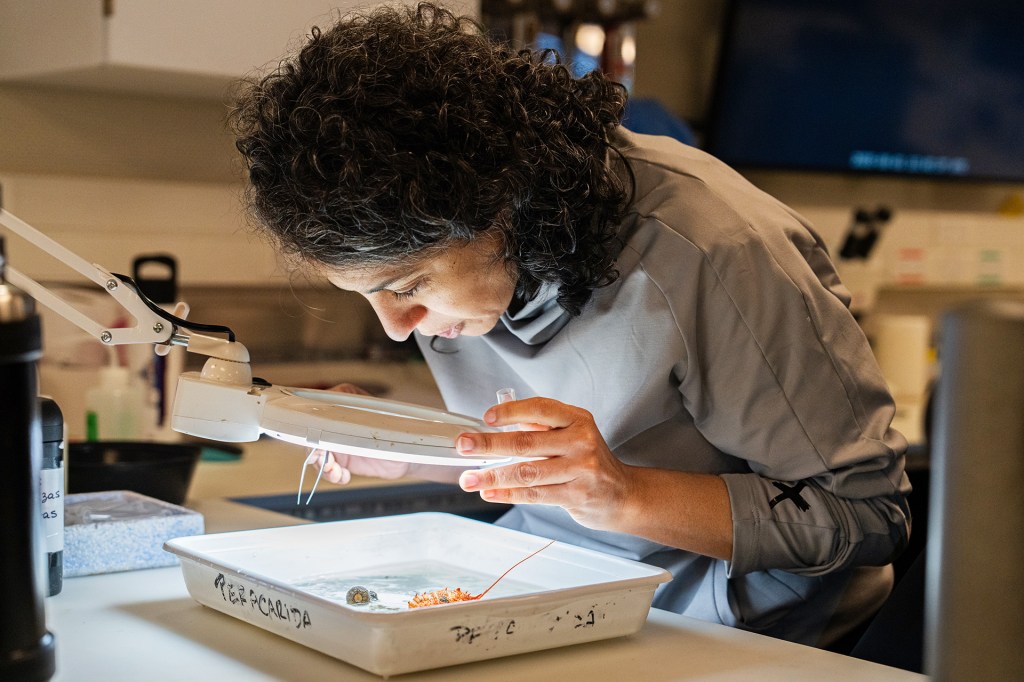
FIRST LOOK Researcher Brenda Doti takes a close look at a crustacean aboard Falkor (too) on August 1, 2025.
MISHA VALLEJO PRUT—SCHMIDT OCEAN INSTITUTEWhat’s in a Name?
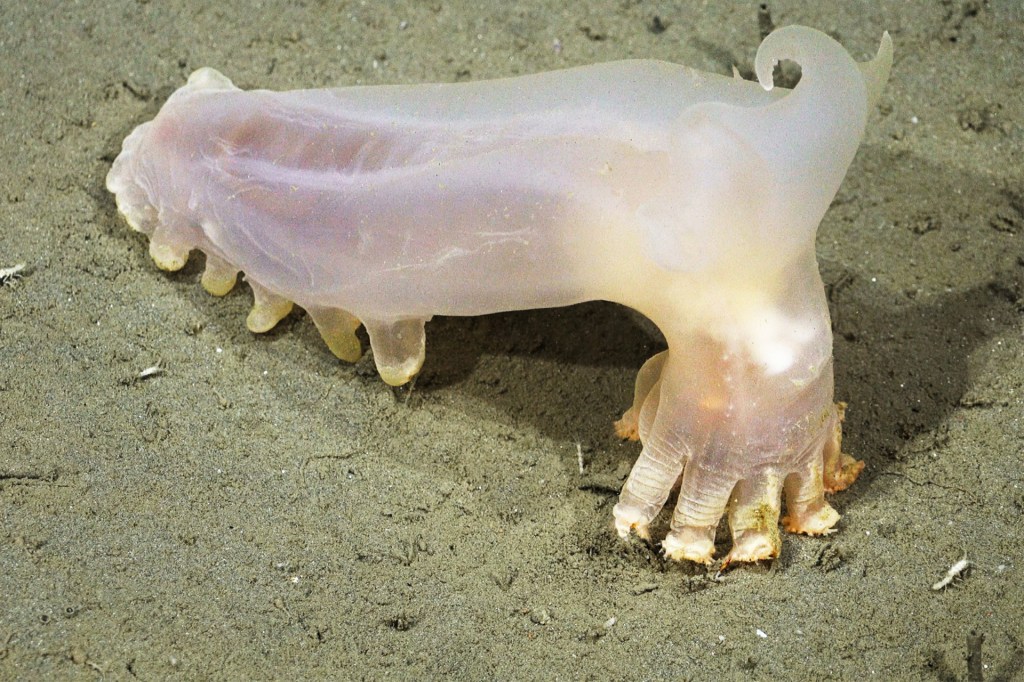
Loki is a nickname, but every newly discovered species needs an official scientific name. To choose it, scientists write a report describing how the animal is different from known species. It can take months or years to complete this process. But there’s a reward: “As the scientists studying this new species, we get to choose its official name,” Solís-Marín says. Until then, Loki officially goes by Peniagone sp. The sp. means the species hasn’t yet been named.
More from Science



Share a Link
- Click the icon above to copy the url link to your clipboard.
- Paste the link into the location in which you share assignments with students. Examples might include, but are not limited to Canvas, Schoology and Edmodo.



Google Classroom
- Click on the icon above to share the article with a class in your Google Classroom.
- Choose an action. Options might include creating an assignment or asking a question.