




Cursive Comeback
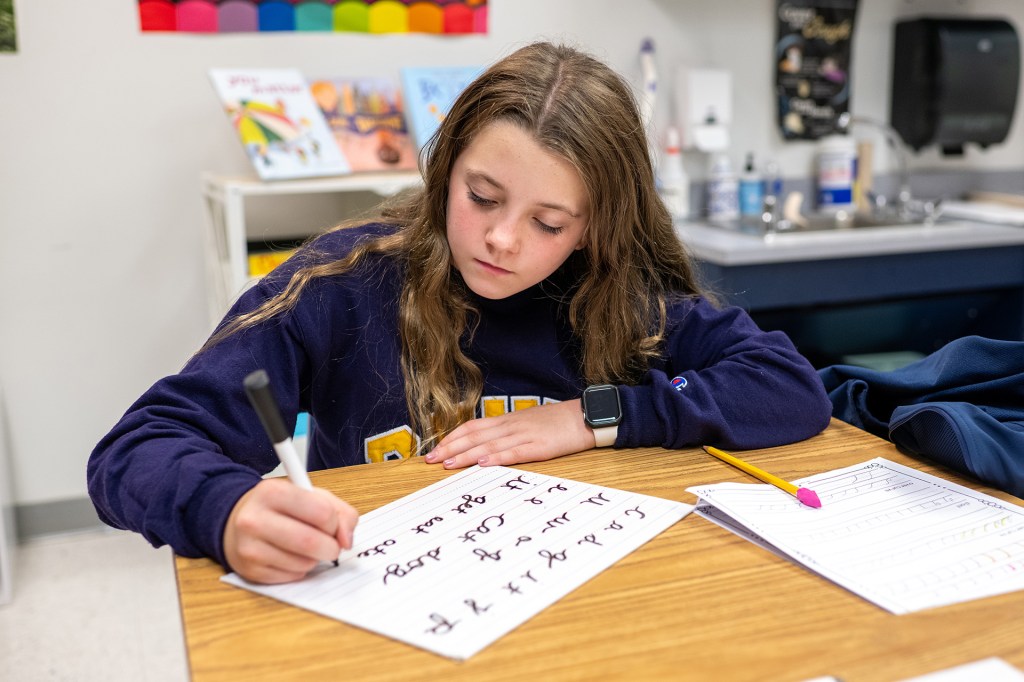
Do you know how to read and write in cursive? Not many young people do. That’s why a growing number of states are making a change. They’re making cursive instruction mandatory mandatory required by rule or law (adjective) .
This surprised Andy Yatsko. “I thought cursive was old-timey,” the Pennsylvania fifth grader told TIME for Kids. Last February, his state’s governor signed a bill. It requires that elementary schools teach cursive. The law is in effect this school year.
Andy says he feels “pretty much okay” with the new requirement. But he expects mixed reactions from friends. No matter your opinion, cursive is making a comeback.
Why Cursive?
Cursive used to be taught regularly in schools in the United States. But about 15 years ago, new education standards were introduced. They led many schools to stop teaching it. Now, at least 25 states have passed laws to bring cursive back.
Dane Watro is a lawmaker in Pennsylvania. He wrote his state’s new handwriting law. Cursive is “a bridge,” he said in a statement. “It connects us to our history, strengthens learning, and deepens our understanding of the world.”
Many agree. Supporters say learning cursive improves memory. They say it improves reading and spelling. They say kids need to know cursive to read old documents (see “Making History”).
Others argue that modern technology makes cursive less important. Morgan Polikoff is a professor at the University of Southern California. He studies trends in education. “When I think of virtually virtually nearly (adjective) everyone that I know,” he says, “cursive is not a part of our daily life.”
Still, Shawn Datchuk sees value in putting pen to paper. He’s a professor of special education at the University of Iowa. He’s also an expert on handwriting instruction. He says handwriting provides a more human connection than digital text. “Handwriting is unique to everybody,” he says. “With typing, everybody’s T looks the same.”
Join the Club
Sherisse Kenerson runs the Cursive Club at Holmes Middle School. That’s in Alexandria, Virginia. A handful of students show up for her after-school club twice a week. They practice penmanship penmanship handwriting (noun) . “They’re excited,” she says.

STEADY HAND Sherisse Kenerson assists a member of Holmes Middle School’s Cursive Club in October.
COURTESY KAREN BOLT—FCPSNew to cursive? Kenerson has some advice. “In order to get great at it, you have to practice,” she says. “It’s going to look really rugged and rough initially. But the more you practice, it’ll look really smooth.”
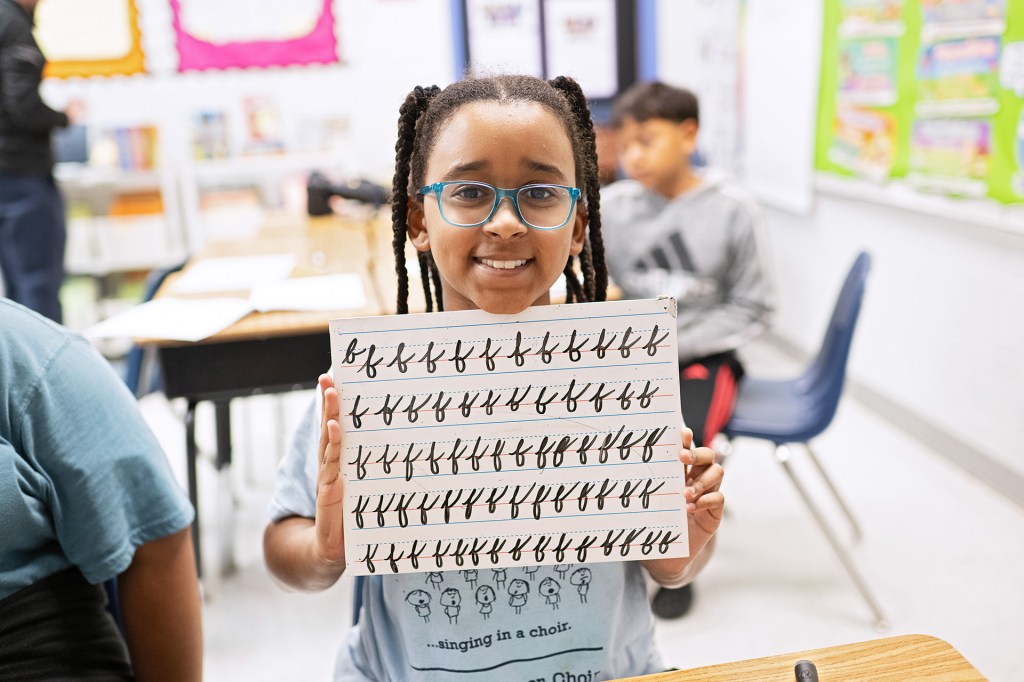
REPEAT AFTER ME A Cursive Club member shows off her hard work.
COURTESY KAREN BOLT—FCPSAndy in Pennsylvania is willing to try. “I do prefer writing in print,” he admits. He suspects that he still will as an adult. “Unless I become the governor,” Andy jokes. “Then I’ll have to do cursive.”
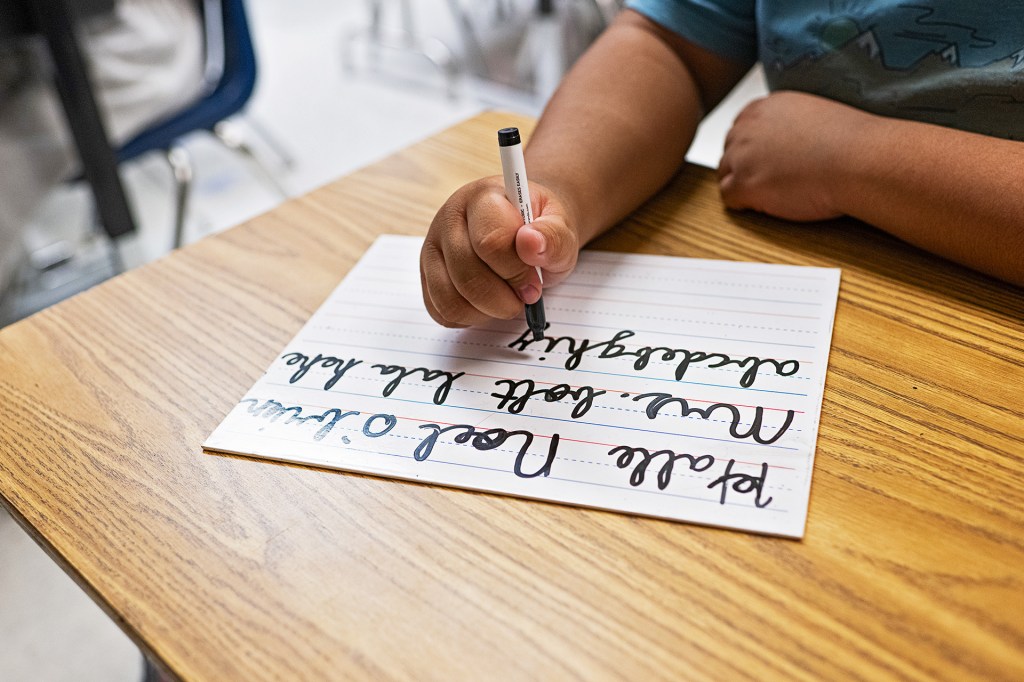
PRACTICE MAKES PERFECT Students learning cursive see their work improve with practice, Kenerson says.
COURTESY KAREN BOLT—FCPSMaking History
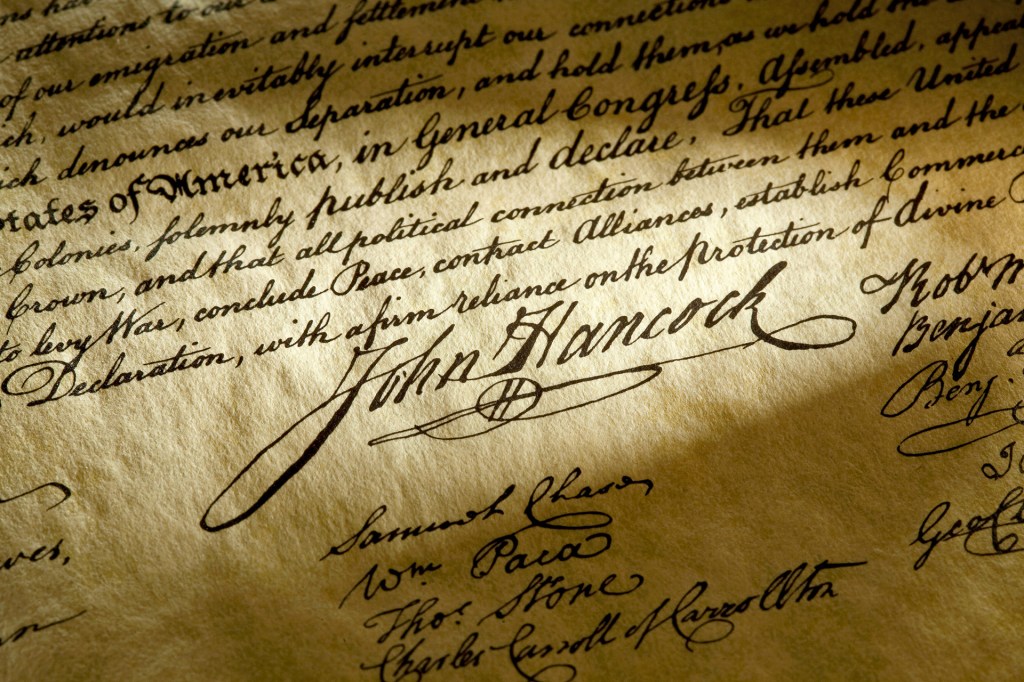
This year, America is celebrating the 250th anniversary of its independence. That means it has been 250 years since the signing of the Declaration of Independence.
The Declaration of Independence is one of the most important documents in United States history. And it’s written in cursive.
John Hancock was the first person to add his signature to the document. A person asking for your John Hancock today is asking you to sign your name in cursive.
More from United States



Share a Link
- Click the icon above to copy the url link to your clipboard.
- Paste the link into the location in which you share assignments with students. Examples might include, but are not limited to Canvas, Schoology and Edmodo.



Google Classroom
- Click on the icon above to share the article with a class in your Google Classroom.
- Choose an action. Options might include creating an assignment or asking a question.