



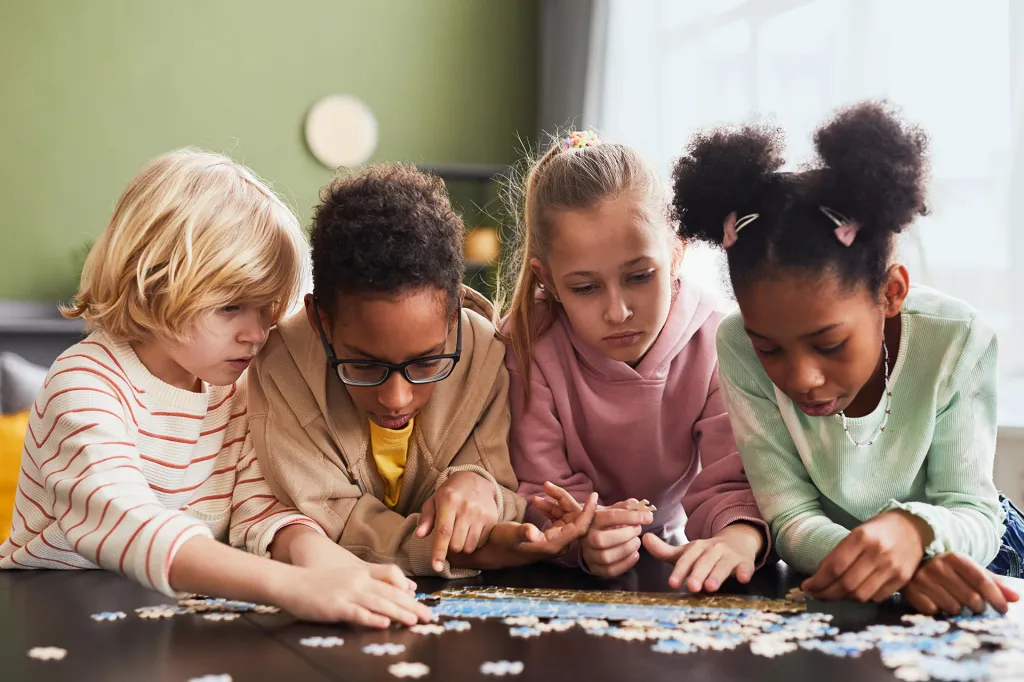
Jodi Jill knows all about the power of puzzles. She’s a professional puzzle maker, and she uses puzzles to relax. Because she’s nervous on flights, she travels with a jigsaw puzzle in her bag. When turbulence turbulence air currents that cause a bumpy airplane ride (noun) hits, she reaches for the puzzle. “It allows me to focus on what’s in front of me and what I can control in that moment,” Jill says.
There’s a lot to know about the benefits of puzzles. Read on to learn how to make them a part of your routine.
Brain Boost
The first benefit is obvious: Puzzles are fun. “We need lightness and fun and opportunities for creativity and relaxation,” psychologist Amy Dykstra says. She’s based in Calgary, Canada. She says fun is “important for our mental health.”
Puzzles have other benefits too, Dykstra says. They can help you stay productive. Maybe you’re having trouble focusing. Try taking a puzzle break. “Once you’ve completed the puzzle, you can use that momentum to keep going in your day,” Dykstra says.
Puzzling is also a way to practice mindfulness mindfulness intentional focus on the present moment (noun) . “Most people are going to benefit from mindfulness activities,” Dykstra says. You might not enjoy meditation, she says. But you might find puzzles “much more interesting.”
Jill suggests starting with a puzzle that interests you. “It doesn’t matter what puzzle you play,” she says. “What matters is that it brings you a spark of joy.” If jigsaws aren’t your thing, Jill suggests trying another type of puzzle. You might enjoy word searches or sudoku.
More from Health


Share a Link
- Click the icon above to copy the url link to your clipboard.
- Paste the link into the location in which you share assignments with students. Examples might include, but are not limited to Canvas, Schoology and Edmodo.



Google Classroom
- Click on the icon above to share the article with a class in your Google Classroom.
- Choose an action. Options might include creating an assignment or asking a question.